


How Do Ball Markers Work in Golf? A Beginner’s Guide to Golf Ball Markers
Golf ball markers are one of those tiny pieces of gear nobody explains to you when you start playing. You see other golfers drop a coin behind their ball on the green, pick the ball up, then set it back down a minute later, and you nod along like you know exactly what is going on. Here is the good news: the idea is simple, and once you understand how golf ball markers work, you will never have to fake it again. A ball marker just holds your spot so you can lift your ball, clean it or get it out of someone’s way, and put it back exactly where it was. That is the whole job.
- A ball marker saves the exact spot of your ball so you can lift it and put it back without penalty.
- Under the Rules of Golf, you must mark before you lift a ball that has to go back on its original spot.
- Almost anything artificial works as a marker (a coin, a tee, a purpose-made marker), but not a leaf, twig, or anything that helps you read the green.
- Place the marker right behind or right next to the ball, then replace the ball on the same spot before you remove the marker.
- Putting from the wrong spot, or forgetting to mark at all, can cost you penalty strokes.

What Is a Ball Marker?
A ball marker is a small object you set down on the green to mark where your ball is before you pick it up. That is it. Most golfers use a flat coin or a purpose-made marker that snaps onto a hat clip, but the object itself is not the point. The point is the spot. Once the marker is down, your ball’s location is “saved,” and you are free to lift the ball, do what you need to do, and return it to the same place.
Why bother lifting it at all? A few reasons. You might want to clean mud or grass off the ball so it rolls true. You might need to move it out of another player’s putting line. Or you might just want to line up the ball’s logo or alignment arrow toward the hole. None of that is allowed unless you mark first.
How Do Golf Ball Markers Work?
The mechanics are easy once you see them broken down. Here is the standard sequence on the putting green:
- Mark the spot. Place your marker on the ground right behind your ball. Directly between the ball and the hole is the classic position, though right next to it is fine too.
- Lift the ball. Pick it up. On the green, you are always allowed to clean it once it is lifted.
- Do your thing. Wipe it off, line up the logo, or step aside so a playing partner can putt through your old spot.
- Replace the ball. Set it back down on the exact spot, right against your marker.
- Remove the marker. Lift the marker, and only then are you ready to putt.
That last step trips up beginners more than you would think. If you putt with your marker still sitting on the green, that is a penalty. Pick it up first, every time.
What Counts as a Legal Ball Marker?
The Rules of Golf are surprisingly relaxed here. The official definition of a ball-marker is “an artificial object,” and it specifically lists a tee, a coin, a purpose-made marker, or another small piece of equipment as fair game. “Equipment” is broad enough that golfers have legally marked with everything from poker chips to hat brims.
There are really only two limits worth remembering. First, the marker has to be artificial, so a leaf, an acorn, or a stone does not count. Second, you cannot use a marker that helps you gauge the slope or break of the green. Those fancy markers with a built-in level? They are not allowed, because the rules prohibit gear that reduces the skill needed to read a putt. For everyday play, a plain coin or a clip-on marker covers you with zero drama.
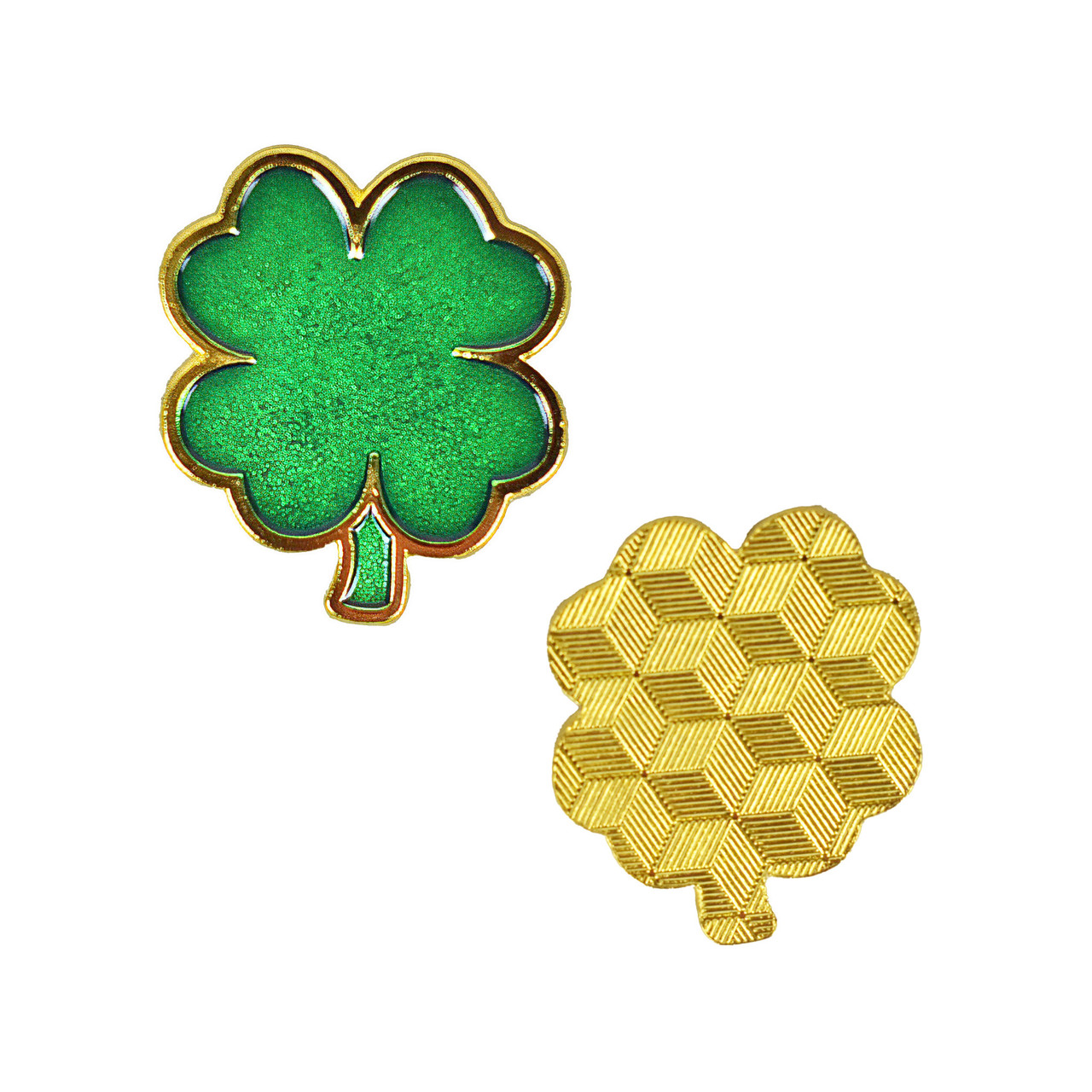
Keep one clipped to your hat or tucked in your pocket and you will always be ready to mark up on the green. Here are a few easy picks:


Where to Place the Marker (and the Mistake That Costs Strokes)
You are allowed to mark behind your ball, beside it, or even in front of it. The rules only ask that the marker sit right behind or right next to the ball. Behind is the standard and the safest habit, because the one thing that actually matters is putting the ball back on its exact original spot.
Replace it in the wrong place and play from there, and you are looking at a two-stroke penalty (or loss of hole in match play) for playing from the wrong spot. This is not a rare technicality, either. It famously cost Lexi Thompson a four-stroke penalty at a 2017 major after she replaced her ball slightly off its mark. The lesson for the rest of us is simple: take a half-second to set the ball back down precisely against your marker, and you will never have to think about it again.
One more note for off-the-green situations. When you take relief under a rule (say, dropping away from a cart path), you are not required to mark first. Marking is mainly a green thing, where the ball goes back on a precise spot.
- The 14-Club Rule: Why You Can Only Carry 14 Clubs (and What Happens If You Carry More)
- Golf Terms for Beginners: A No-Nonsense Guide for People Who Have No Idea What a Bogey Is
- How to Start Golfing This Spring: A No-Pressure Guide to Your First Season
- The Sunday Bag Strategy: How to Start Golfing for Cheap
A Quick Word on Etiquette
Marking is not just about the rulebook, it is also basic green courtesy. If your ball sits in a playing partner’s putting line, mark it and lift it so they have a clean path. If your marker itself is in their way or distracting, the polite move (and one the rules allow them to request) is to move it a putter-head-length to the side, then move it back before you putt. Keep your marker small and plain, and you will rarely run into any of this.
Gear Up: Ball Markers & Green Tools
You do not need anything fancy to mark your ball, but a clip-on marker or a combo divot tool means you always have one handy instead of digging for loose change. Grab a few cheap ones and never hold up the group again.

The Bottom Line
Golf ball markers solve one small but constant problem: how to lift your ball on the green without losing your spot. Mark it, lift it, set it back exactly where it was, then pick up the marker before you putt. Use anything artificial that does not help you read the green, and put the ball back precisely. Do that and you have got the whole thing handled, which is more than a lot of golfers who have been playing for years can say.
Frequently Asked Questions
Do you have to use a ball marker in golf?
Can you use a coin as a golf ball marker?
Where do you place a ball marker?
What happens if you putt with the ball marker still down?
Can a ball marker help you read the green?
Source: Rules of Golf, Rule 14 (Marking, Lifting and Cleaning) and the Definition of “Ball-Marker,” as published by the USGA and The R&A.
Writer/Editor: Danny Kapp is a passionate golf enthusiast and a 10-year veteran golf blog writer for Rock Bottom Golf, offering his unique perspective on the game. With a keen eye for detail, he covers various aspects of golf, ranging from technical insights to the latest trends in golf equipment and golf technology.

Last Updated on by Danny Kapp