


Playing Golf as a Single: What to Expect When You Get Paired Up (and How to Not Be the Awkward Fourth)
The short answer? Playing golf as a single means you will usually be paired with strangers, and that is completely normal at both public courses and most private clubs. Courses pair singles to keep the tee sheet full and pace of play moving. If a group seems less than thrilled to see you, it is far more often about their plans for that round than about you personally.
I’ve played enough rounds with strangers to know that the first couple of holes usually tell you everything. Some groups are talking before they’ve left the first tee but others barely say a word until the turn. Match their energy instead of forcing yours.
Now the longer version, because there is a real disagreement here that most etiquette guides skip.

The situation that started this
A golfer recently joined a club and started booking open spots as a single, usually landing as the third or fourth in a group he had never met. Four rounds in, it had gone sideways almost every time. Twice the group waved him ahead to play through. Once he was essentially frozen out for eighteen holes. He went online to ask a fair question: is this normal, or am I doing something wrong?
The responses split three different directions. Some said he got unlucky with a cliquey crowd. Some said groups book as a threesome on purpose and a stranger dropping in genuinely does change the round. And a few pointed out that being waved ahead at 7:30 in the morning is usually a favor, not an insult.
They were all partly right. That is the useful part.
Is it normal to get paired with strangers in golf?
Yes. At public and municipal courses it is standard practice. The starter’s job is to fill the tee sheet and protect pace of play, and a single walking on alone creates a gap that slows everyone behind. Pairing you into an open spot solves both problems at once.
At private clubs it varies more than people expect. Some clubs treat pairing as the whole point of membership, since that is how you meet people. Others have a culture where booking into someone else’s tee time is considered presumptuous. Neither is wrong, and the only way to know which one you are dealing with is to ask the pro shop directly.
If you are new to a course, that one question (“do you pair singles here, or should I look for open times?”) will save you a lot of guessing.
Why a group might not want a fourth
This is the part that stings when it happens, so it helps to know the reasons have almost nothing to do with you:
- They have a standing weekly game. Same four guys, same time, same bets, same running jokes for the last eleven years. Their fourth is out sick and they booked as a three because that is who was available.
- It is a business round. Someone is taking a client out. There is a deal being discussed between shots, and a stranger in the cart changes what can be said.
- There is money on the line. A skins game or a Nassau with an established format does not absorb an extra player cleanly, especially if you are not betting.
- They booked three spots on purpose. Some players pay for a private club specifically so they can play with whoever they choose. You can disagree with the attitude, but it is a real one and it is common.
- They are just not friendly. This exists too. Every course has a few. It is not a reflection on you.
Iron Sets Worth a Look
If the top of your bag is sorted and the rest needs attention, here are three sets covering different budgets and player types.
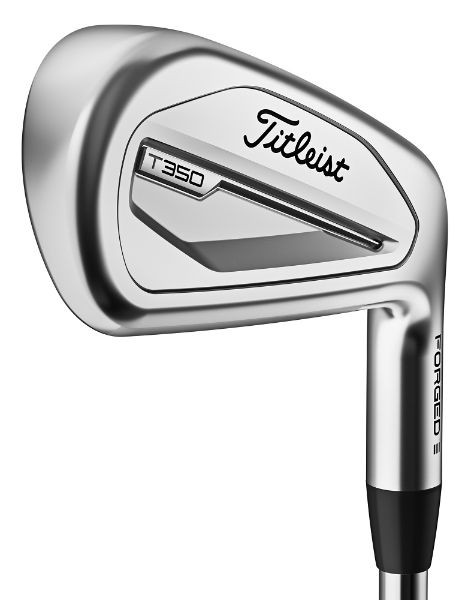
Hollow body construction with dual tungsten weighting, built for high launch and forgiveness. The 4 iron sits at 20 degrees, which puts the top of this set right in utility iron territory.
Shop the T350 3G
A cap back design with a thru slot speed pocket, aimed at golfers who want easy launch and help on strikes low in the face. A strong value pick a few seasons past release.
Shop the SIM2 Max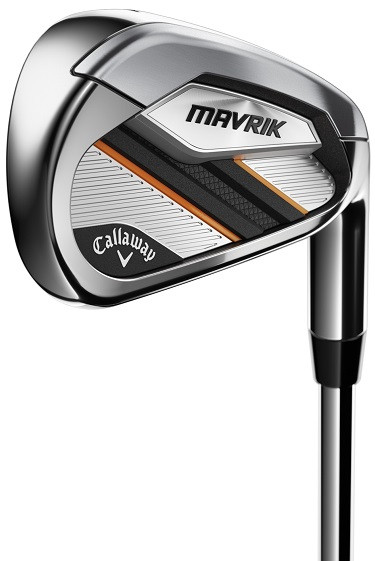
Flash Face technology with a face design tuned individually by club. A six piece makeup keeps the price down and leaves room to add a utility iron at the top.
Shop the MavrikPrices and availability change. Check the product page for current details.
Being waved ahead usually is not an insult
If a group tells you to play on through, the instinct is to hear a rejection. Most of the time it is not.
A single with no one to wait on can play eighteen holes in about two hours. A foursome cannot. If the group ahead is clear and they can see you are quick, sending you on is the courteous move for both parties. You get a fast round, they stop feeling rushed. That is a good trade.
The tell is how it is offered. “You’ll be quicker than us, go ahead and jump” is courtesy. Having the starter deliver the message before you reach the first tee is something else.
How to be the single that groups actually like playing with
Groups warm up fast to a player who makes the round easier. Here is what actually moves the needle, and none of it is about how well you play:
Keep pace above all else. Nobody cares that you shot 104. They care that you took eight minutes to do it on the seventh hole. Play ready golf, walk to your ball while others are hitting, and take one practice swing instead of four.
Be ready when it is your turn. Club selected, glove on, ball and tee in hand. The player who is still rummaging in the bag when the group is waiting is the one who gets remembered.
Keep your attitude flat. Slamming clubs and cursing after every shot is exhausting to be around for four hours. Being self-deprecating about a bad round is fine. Being visibly miserable is not.
Never give unsolicited swing advice. Even if you are right. Especially if you are right.
Read the room in the first two holes. Some groups want to talk the whole way. Some want quiet. Match whatever you find rather than deciding for them.
Take care of the course. Fix your ball marks, rake the bunker, replace your divots. It signals you know what you are doing regardless of your score, and it costs you nothing. A divot tool and a couple of ball markers in your pocket make this automatic.
Introduce yourself on the first tee. Name, handicap or rough scoring range, and that you are happy to play whatever format they have going. It takes fifteen seconds and it clears up most of the uncertainty on both sides.
If you keep getting frozen out, talk to the pro
The single most underrated resource at any course is the person behind the counter. The pro and the starter know the tee sheet better than anyone. They know which groups welcome a fourth, which ones have a money game running, which ones are slow, and which ones you should avoid entirely.
Tell them your handicap, your schedule, and that you are looking for regular playing partners. At most courses that conversation ends with you getting slotted into a group that actually wants you there, or added to whatever league, men’s day, or weekly scramble already exists. Organized events are a far better way to meet people than cold-joining tee times, because everyone showing up to an event has already agreed to play with strangers.
The other side: how to treat the single who joins your group
Most articles on this subject only address the newcomer. Here is the flip side, because if you play regularly you will end up on this end of it.
If you book as a two or a three at a course that pairs singles, you have implicitly accepted that someone might join you. If that genuinely does not work for your round, book all four spots. It is the cleanest solution and it takes one extra click.
When someone does get added:
- Say hello on the first tee and get their name
- Tell them upfront if you have a game or a format going, and offer to include them
- If you would rather they play through, say so directly and kindly, on the first tee rather than the sixth hole
- Do not make them guess whether they are welcome for four hours
Having the starter tell someone they are not wanted, after they have already paid and warmed up, is the one version of this that has no defense.
Frequently Asked Questions
Common questions about playing golf as a single and getting paired with other golfers.
Do you have to play with strangers when you book as a single?
At most public courses, yes. Booking as a single means accepting that you may be paired into an existing group. Courses do this to keep the tee sheet full and protect pace of play. If you want to play alone, call the pro shop and ask about walk-on times, early morning slots, or twilight rounds when the course empties out.
Can you refuse to be paired with another golfer?
You can ask, but the course is not obligated to honor the request. Tee sheet management is the course’s call, not the player’s. If solo play matters to you, the reliable solution is to book all four spots in a tee time or play at off-peak hours when the course has room.
What handicap do you need to join a random group?
None. There is no skill requirement for being paired up. Pace and attitude matter significantly more than score. A 25-handicap who keeps up and stays positive is a better playing partner than a 10-handicap who takes five minutes over every putt.
Is it rude to book into someone else’s tee time?
At public courses, no. That is exactly how the tee sheet is designed to work. At private clubs it depends entirely on club culture. Some clubs consider it the normal way members meet each other, while others treat it as presumptuous. Ask the pro shop what the norm is before you make a habit of it.
How fast should a single play?
A single with a clear course ahead can finish eighteen holes in roughly two to two and a half hours. For context, USGA research puts the average round at about four and a half hours. When you are paired into a group, match the group’s pace rather than pushing them.
Why would a group ask a single to play through?
Usually as a courtesy rather than a snub. A single plays far faster than a foursome, so if the course ahead is clear, waving you through gets you a quick round and takes pressure off the group behind. It can also signal that the group has a private conversation, a business round, or an established money game going.

The bottom line
Playing golf as a single is one of the better things you can do for your game and your golf social circle, but the first handful of rounds can feel rough. Some groups will be great. A few will not. Neither outcome says much about you.
Show up ready, keep pace, take care of the course, and let the pro shop point you toward the right people. Three or four rounds in, you will usually have a name or two worth texting the next time you want to play.
Writer/Editor: Danny Kapp is a passionate golf enthusiast and a 10-year veteran golf blog writer for Rock Bottom Golf, offering his unique perspective on the game. With a keen eye for detail, he covers various aspects of golf, ranging from technical insights to the latest trends in golf equipment and golf technology.

Sources & Further Reading
Official rules and pace-of-play guidance referenced in this article.
-
Expected Standards of Player Conduct (Rule 1.2)
· United States Golf Association
Explains how the former Etiquette section was folded into Rule 1.2, covering integrity, consideration for others, and care of the course.
-
Encouraging Prompt Pace of Play
· United States Golf Association
Confirms that playing out of turn, or “ready golf,” is proper in stroke play when it is safe and responsible.
-
Tips and Suggestions for Improving Pace of Play
· United States Golf Association
Practical guidance on being efficient on the green, arriving ready to play, and picking up to maintain pace in casual formats.
-
Recognizing and Improving Pace-of-Play Pain Points
· United States Golf Association
Source of the average round time figure and analysis of how small delays compound across a full tee sheet.
-
Rules of Golf: Spirit of the Game
· The R&A
Covers the 40-second stroke recommendation and the principle that priority on the course is determined by a group’s pace of play.
Last Updated on by Danny Kapp