


Golf Terms for Beginners: A No-Nonsense Guide for People Who Have No Idea What a Bogey Is
So you’ve started playing golf (or you’re thinking about it), and suddenly everyone around you is speaking a language you didn’t sign up to learn. Your buddy says he “lipped out for birdie,” the guy on the next tee is complaining about his “banana ball,” and the course ranger just told your group to “pick up the pace through the turn.” If you’re Googling golf terms for beginners right now, you’re not alone, and you’re in the right place.
Here’s the thing: golf has been around for centuries, and it’s collected enough jargon to fill a small dictionary. Nobody hands you a cheat sheet at the pro shop. You’re just expected to absorb it through context clues and mild embarrassment.
Consider this your decoder ring. We’ve rounded up the golf terms you’re most likely to hear on the course, at the range, or from that one coworker who won’t stop talking about their round last weekend. No fluff, no deep dives into the Rules of Golf. Just the words you need to know so you can nod along like you belong out there.
Because you do.

Scoring Terms (A.K.A. the Numbers That Define Your Mood)
Par: The number of strokes a skilled golfer is expected to take on a given hole. For example, a par-3 means three shots to get the ball in the hole, whereas a par-4 means four. In short, you get the idea. Typically, most courses are made up of a mix of par-3s, par-4s, and par-5s, and overall, the total par for 18 holes is usually somewhere around 72.
Birdie: One stroke under par on a hole. If you finish a par-4 in three shots, that’s a birdie. It’s a great feeling. Soak it in, because as a beginner, they don’t come around often.
Eagle: Two strokes under par. Finishing a par-5 in three shots? That’s an eagle. For most recreational golfers, this is rare enough to tell stories about for years.
Albatross (or Double Eagle): Three strokes under par. This is basically a unicorn. You’ll probably never see one in person, but now you know the word in case it comes up at trivia night.
Bogey: One stroke over par. A bogey on a par-4 means you finished in five. As a beginner, bogeys are your friend. Seriously. If you’re making bogeys, you’re doing better than you think.
Double Bogey: Two over par. Triple bogey is three over. And so on. Don’t worry about counting too high early on. It happens to everyone.
Ace (Hole-in-One): Getting the ball in the cup in a single shot, typically on a par-3. If this happens to you as a beginner, buy a lottery ticket immediately.
Keep Reading
More from the Rock Bottom Golf Blog
Guides and tips for golfers who are just getting started.




On the Course: The Landscape
Tee Box: The designated starting area for each hole. You’ll see colored markers (red, white, blue, black, etc.) indicating different distances. Beginners should play from the forward tees without a shred of guilt. It makes the game way more fun.
Fairway: The short, well-maintained strip of grass that runs from the tee box toward the green. This is where you want your ball to land. Think of it as the runway.
The Rough: The longer, thicker grass bordering the fairway. Harder to hit from and where your ball will spend a lot of quality time in the early days. The farther off the fairway you go, the deeper and nastier the rough gets.
The Green: The smooth, closely mowed area surrounding the hole where you putt. This is where the most specific etiquette rules live. Treat it gently.
The Fringe (or Collar): The slightly longer strip of grass between the green and the rough. Your ball is close to the green but not quite on it. You can putt from here, chip from here, whatever feels right.
Bunker (or Sand Trap): A depression filled with sand, usually near the green or along the fairway. Getting out of one is its own skill. When you do hit out of it, rake the sand smooth before you leave.
Hazard: Any area on the course that’s designed to make your life harder. Water hazards (ponds, creeks, lakes) and bunkers are the most common. Penalty strokes may apply.
Dogleg: A hole where the fairway bends left or right. A “dogleg left” curves to the left. A “dogleg right” curves to the right. Named that way because it looks like, well, a dog’s leg.
The Turn: The halfway point of your round, between holes 9 and 10. Most courses have a snack bar, restrooms, or a beverage cart stop here. It’s your halftime. Grab a hot dog. You’ve earned it.

Shots and Ball Flight
Drive: Your first shot on a hole, usually hit with (you guessed it) the driver from the tee box. The goal is distance. Accuracy is a bonus at first.
Approach Shot: Any shot aimed at getting the ball onto the green. Usually your second shot on a par-4 or your second or third on a par-5.
Chip: A short, low shot played near the green. It pops up briefly and then rolls toward the hole. One of the most useful shots in golf, and one of the easiest to practice.
Pitch: Similar to a chip but with more height and less roll. Used when you need the ball to go up and come down softly, like when there’s a bunker between you and the green.
Putt: A shot played on the green with (surprise) a putter. The ball stays on the ground and rolls toward the hole. Putting is where you’ll save the most strokes once you start improving.
Shank: When the ball comes off the hosel (the part where the clubhead meets the shaft) and rockets sideways. It’s as ugly as it sounds. In golf culture, some players are superstitious about even saying the word out loud. You’ve been warned.
Slice: A shot that curves hard to the right (for a right-handed golfer). This is probably the most common miss for beginners. You’ll get very familiar with it.
Hook: A shot that curves hard to the left (for right-handers). Less common for beginners than a slice, but just as frustrating when it shows up.
Draw: A controlled, gentle curve from right to left. This is the “good” version of a hook. Many golfers spend years trying to develop one.
Fade: A controlled, gentle curve from left to right. The “good” version of a slice. Plenty of great golfers play a fade on purpose.
Banana Ball: Slang for an extreme slice. If someone says you hit a banana ball, it’s not a compliment, but it is pretty funny.
Top (or Thin): When you hit the top half of the ball instead of making clean contact. The ball usually shoots forward along the ground like a scared rabbit. Embarrassing, but it happens to everyone.
Fat (or Chunked): When you hit the ground before the ball, taking a huge divot and sending the ball about 30% of the intended distance. Also happens to everyone.
Whiff: A complete miss. You swung, the ball didn’t move. It counts as a stroke (sorry). Just laugh it off.
Featured Gear
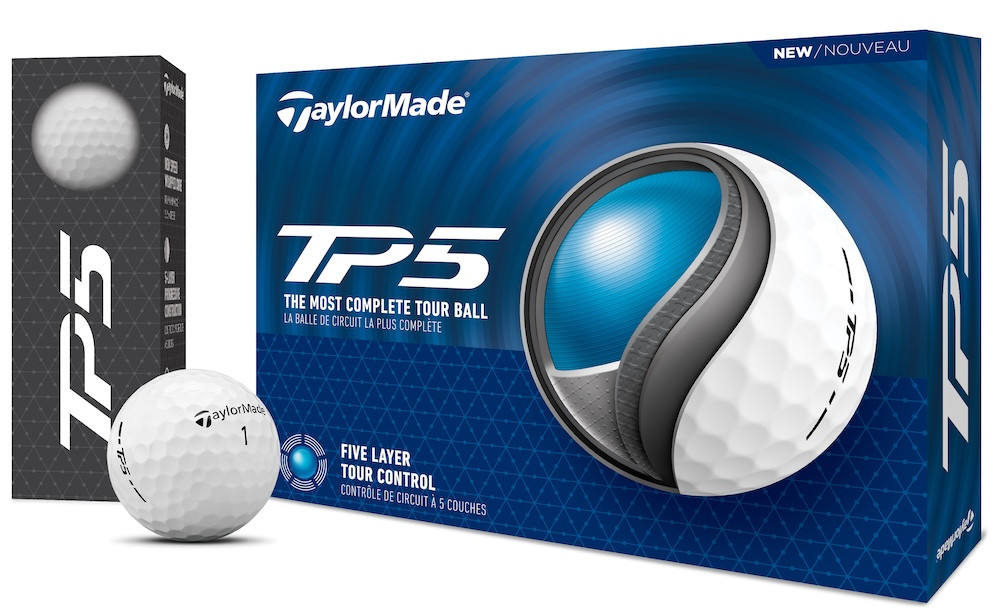
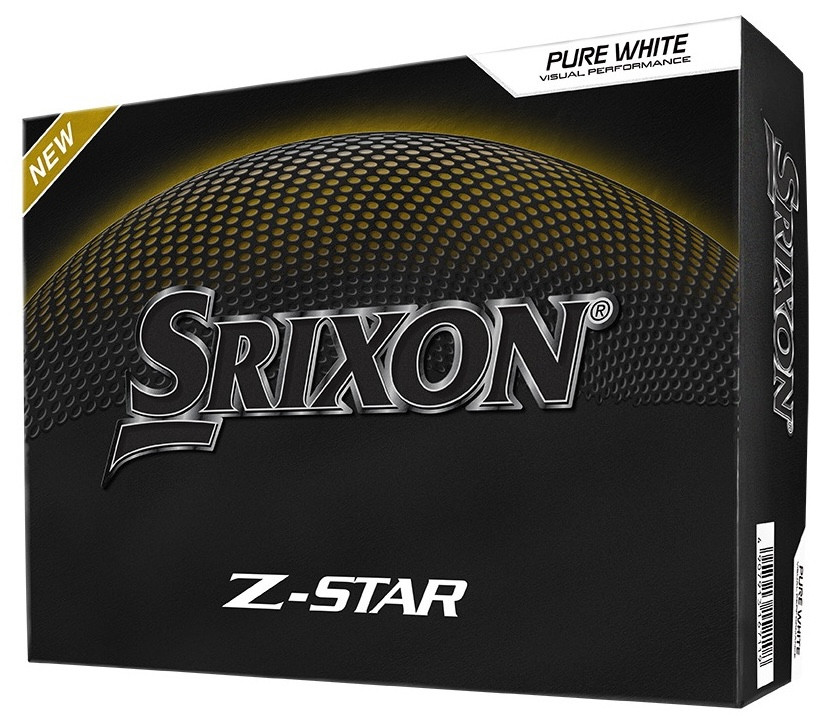
Tour-Level Golf Balls at Rock Bottom Prices
The same balls the pros play, without the pro price tag.


Gear Talk
Iron: Clubs with flat, angled metal heads, numbered 3 through 9. In general, lower numbers hit farther with a lower trajectory, while higher numbers are shorter and easier to hit. For that reason, beginners should start with the higher ones (7, 8, 9) before gradually working their way down.
Wood: Despite the name, modern woods are made of metal (usually titanium or steel). Your driver is a “1-wood.” A 3-wood and 5-wood are also common. They’re designed for distance.
Hybrid: A cross between a wood and an iron. Easier to hit than a long iron, and a great option for beginners who struggle with 3, 4, or 5-irons. If you don’t have one yet, consider it.
Wedge: Short-game clubs designed for high, short shots. The most common are the pitching wedge (PW), sand wedge (SW), gap wedge (GW), and lob wedge (LW). You don’t need all four to start, but a PW and SW will cover most situations.
Putter: The flat-faced club you use on the green. It’s the club you’ll use more than any other during a round, so it’s worth finding one that feels comfortable.
Loft: The angle of the clubface. More loft means a higher shot that travels a shorter distance. A pitching wedge has more loft than a 7-iron, which has more loft than a driver.
Shaft Flex: How much the club’s shaft bends during your swing. Common options are ladies, senior, regular, stiff, and extra stiff. If you’re not sure which one is right for you, check out our practical guide on shaft flex by swing speed.
On the Green
Lip Out: When your putt catches the edge of the hole and spins around the rim without falling in. One of the most soul-crushing experiences in golf. You’ll feel it when it happens.
Break: The way a putt curves due to the slope of the green. “Reading the break” means figuring out which way the green tilts so you can aim accordingly.
Line: The imaginary path your ball will take from where it sits to the hole. Don’t step on someone else’s line (that’s a big etiquette no-no), and try to read your own before you putt.
Ball Mark (or Pitch Mark): The small dent your ball leaves when it lands on the green. Fix it with a divot repair tool or a tee. It takes five seconds. Do it every time.
Gimme: A putt that’s close enough to the hole that your playing partners say, “That’s good, pick it up.” Not official in competitive play, but very common in casual rounds. A nice little gift from your group.

Course Culture and Etiquette Terms
Fore!: The universal warning shout in golf. If your ball is heading toward another person, yell this immediately and loudly. Don’t be shy. Getting hit by a golf ball is no joke.
Mulligan: An unofficial do-over, usually taken on the first tee. It’s not in the rulebook, but it’s a common courtesy in friendly rounds. Don’t take one on every hole, though, or you’ll get some looks.
Divot: The chunk of turf you dig up when hitting an iron shot. Taking a divot is actually a sign of a good swing. Just replace it or fill the hole with the sand mix from your cart.
Handicap: A number that represents your skill level relative to par. The lower the number, the better the golfer. The system lets players of different abilities compete fairly. Don’t worry about yours yet. Just know the word so you’re not caught off guard when someone asks.
Pace of Play: How quickly your group moves through the course. Keeping up with the group in front of you is the single most important piece of golf etiquette. If you want a deeper dive on this, we covered it in detail here.
The Honor: The player with the best score on the previous hole gets to tee off first on the next one. On the first hole, it’s usually whoever is ready or whoever loses the coin toss.
Ready Golf: A casual format where whoever is ready hits next, regardless of who’s farthest from the hole. Most recreational rounds use ready golf to keep pace moving. If you’re ready, go ahead and hit.
Cart Path Only: When the course restricts carts to paved paths only, usually because of wet conditions. You’ll have to walk from the path to your ball and back. It adds time, so plan accordingly.
Golf Terms FAQ
Frequently Asked Questions About Golf Terminology
Quick answers to the questions new golfers ask most.
What does par mean in golf?
Par is the number of strokes a skilled golfer is expected to take on a given hole. Each hole on a golf course is rated as a par-3, par-4, or par-5 based on its length and difficulty. A full 18-hole course typically adds up to a total par of around 70 to 72. If you finish a hole in exactly the number of strokes assigned to it, you’ve made par. For beginners, making par on any hole is a great accomplishment worth celebrating.
What does bogey mean in golf?
A bogey means you completed a hole in one stroke over par. So if you score a 5 on a par-4, that’s a bogey. A double bogey is two over par, and a triple bogey is three over. For new golfers, bogeys are perfectly respectable scores. Many beginners aim for “bogey golf” (averaging one over par per hole, or roughly a score of 90) as an early milestone. Don’t let the name fool you into thinking it’s a bad thing when you’re just starting out.
What is a mulligan in golf?
A mulligan is an informal do-over. If you hit a terrible tee shot, your playing partners might let you re-hit it without counting the first attempt. Mulligans are not part of the official rules of golf and you won’t see them in any tournament or competitive round. They’re strictly a casual, friendly tradition, most commonly offered on the first tee when everyone is still loosening up. Just don’t take one on every hole, or your group may start giving you a hard time.
What is the difference between a slice and a hook in golf?
For a right-handed golfer, a slice is a shot that curves sharply from left to right, while a hook curves sharply from right to left. Both are caused by the clubface being misaligned at impact relative to the swing path. The slice is by far the more common issue for beginners and is sometimes called a “banana ball” because of its exaggerated curve. A controlled version of a slice is called a fade, and a controlled version of a hook is called a draw. Most golfers spend a good chunk of their early rounds learning to minimize one or the other.
Why do golfers yell “fore” on the course?
“Fore” is a safety warning that golfers shout when their ball is heading toward another person or group. The term likely originated from the military word “beware before,” which was shortened over time. If your shot is flying anywhere near other players, you should yell “fore” immediately and as loudly as possible. A golf ball can travel well over 100 mph, so a heads-up can prevent a serious injury. If you hear someone else shout it, cover your head and duck rather than looking up to find the ball.
How many golf clubs should a beginner carry?
While the rules allow a maximum of 14 clubs in your bag, beginners don’t need anywhere close to that many. A solid starter setup is around 8 to 9 clubs: a driver, a fairway wood or hybrid, a few irons (7, 8, and 9), a pitching wedge, a sand wedge, and a putter. This covers most situations you’ll face on the course without overloading your bag. As your skills develop and you start to understand the gaps in your distances, you can add clubs from there. If you’re looking for an affordable way to get started, check out complete beginner sets at Rock Bottom Golf.
A Few Bonus Terms You’ll Hear in Conversation
19th Hole: The bar or restaurant at the clubhouse. Where golfers go after their round to recap every shot, exaggerate their best ones, and conveniently forget their worst.
Sandbagger: Someone who claims a higher handicap than they actually play to, giving them an unfair advantage in competitions. Not a term you want attached to your name.
Snowman: Scoring an 8 on a single hole (because the number 8 looks like a snowman). It happens. Shake it off and move on.
Fried Egg: When your ball lands in a bunker and buries itself, leaving just the top visible. It looks like an egg in a frying pan. It’s not fun to hit out of, but the name is kind of great.
Dance Floor: Slang for the green. “He’s on the dance floor” means the ball made it onto the putting surface.
Duff: A badly mishit shot. Interchangeable with “chunk” or “flub.” Whatever you call it, you just didn’t make solid contact.
Worm Burner: A shot that barely gets off the ground and screams along the turf. Not what you intended, but hey, it went forward.
You Don’t Have to Memorize All of These Golf Terms for Beginners
Golf lingo can feel overwhelming, but here’s the secret: you’ll pick up most of it naturally just by playing. The more rounds you get in, the more these terms will click. Nobody expects you to walk onto the course speaking fluent golf on day one.
If you hear a word you don’t recognize, just ask. Most golfers love talking about the game, and explaining a term to a new player is about the most harmless question you can throw at them.
The important thing is that you’re out there. You don’t need to know every term to enjoy the game. You just need a few clubs, a sense of humor, and maybe a couple of extra balls in your pocket. (Trust us on that last one.)

Ready to Gear Up?
So, if you’re just getting started, you don’t need to spend a fortune to get on the course. In fact, at Rock Bottom Golf, we’ve got complete beginner sets, budget-friendly individual clubs, and all the accessories you need to play your first round without breaking the bank. Better yet, you can mix and match as your game grows. Save more, play more.
Writer/Editor: Danny Kapp is a passionate golf enthusiast and a 10-year veteran golf blog writer for Rock Bottom Golf, offering his unique perspective on the game. With a keen eye for detail, he covers various aspects of golf, ranging from technical insights to the latest trends in golf equipment and golf technology.

Last Updated on by Danny Kapp