


The Sunday Bag Strategy: How to Start Golfing for Cheap
The Sunday Bag Strategy
If you walk into a major golf retailer today, you might leave thinking you need to take out a second mortgage just to start playing. Between the $600 drivers, the massive cart bags that look like small furniture, and the 14-club sets, the barrier to entry feels incredibly high.
But here is a practical reality: For most beginners, carrying all 14 clubs is usually unnecessary. While the rules of golf allow for a maximum of 14 clubs, you are free to carry fewer, and doing so can actually simplify the game when you are just starting out. In fact, juggling that much gear can make learning harder for many beginners.
If you want to start golfing without draining your savings, consider the Sunday Bag Strategy. It is a smart way to build a minimalist golf bag that saves your wallet, saves your back, and simplifies the game.

TL;DR: The Sunday Bag Strategy
- ✓ Less is More: Beginners rarely need 14 clubs. Carrying just 5–6 clubs simplifies your decisions, reduces “analysis paralysis,” and makes learning the game easier.
- ✓ The “Fab Five” Setup: Stick to the essentials: 3-Wood (or High-Loft Driver), Hybrid, 7-Iron, Pitching Wedge, and Putter.
- ✓ Save Big: A lightweight Sunday bag is cheaper than a cart bag and allows you to walk the course, saving you $15–$40 on cart fees every round.
- ✓ Buy Used: Don’t buy new. Scour used bins and thrift stores for single irons. You can often assemble this entire kit for less than the cost of one new driver.
What is a “Sunday Bag”?
Historically, caddies and players used a “Sunday Bag” for casual rounds. These are lightweight, unstructured bags (sometimes called “pencil bags”) that hold only a handful of clubs. They don’t have massive pockets for rain gear or shoes; they are designed for the essentials.
By adopting this strategy, you aren’t just buying a smaller bag; you are adopting a philosophy of minimalism.
- The Cost Benefit: Basic Sunday bags can start around $30, with many solid options under about $100. Compare that to a heavy stand bag or cart bag, which is often $200–$300 or more.
- The Cart Fee Hack: Because the bag is featherlight, you can easily walk the course. This saves you the cart fee, which is often around $15–$40 depending on the course.
- The Gear Savings: You only need to buy 5 or 6 clubs, not a full set.
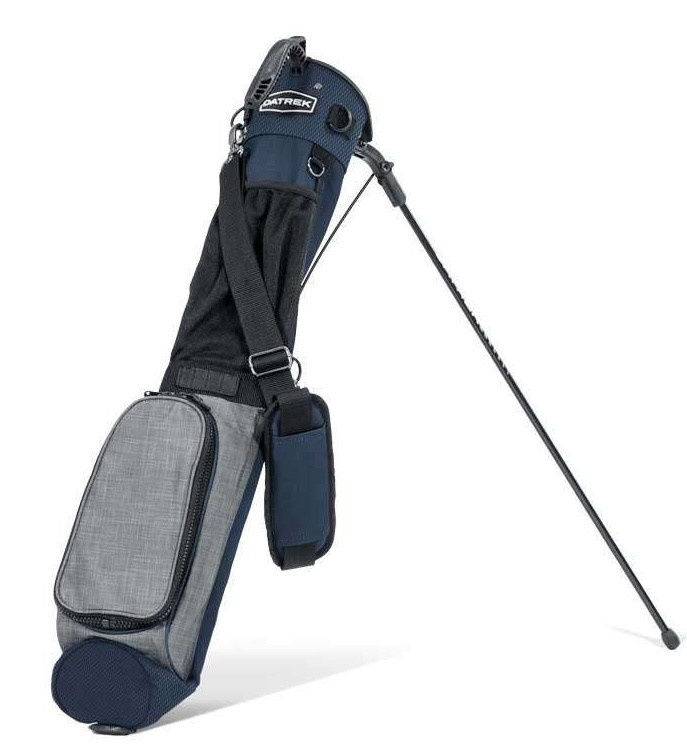
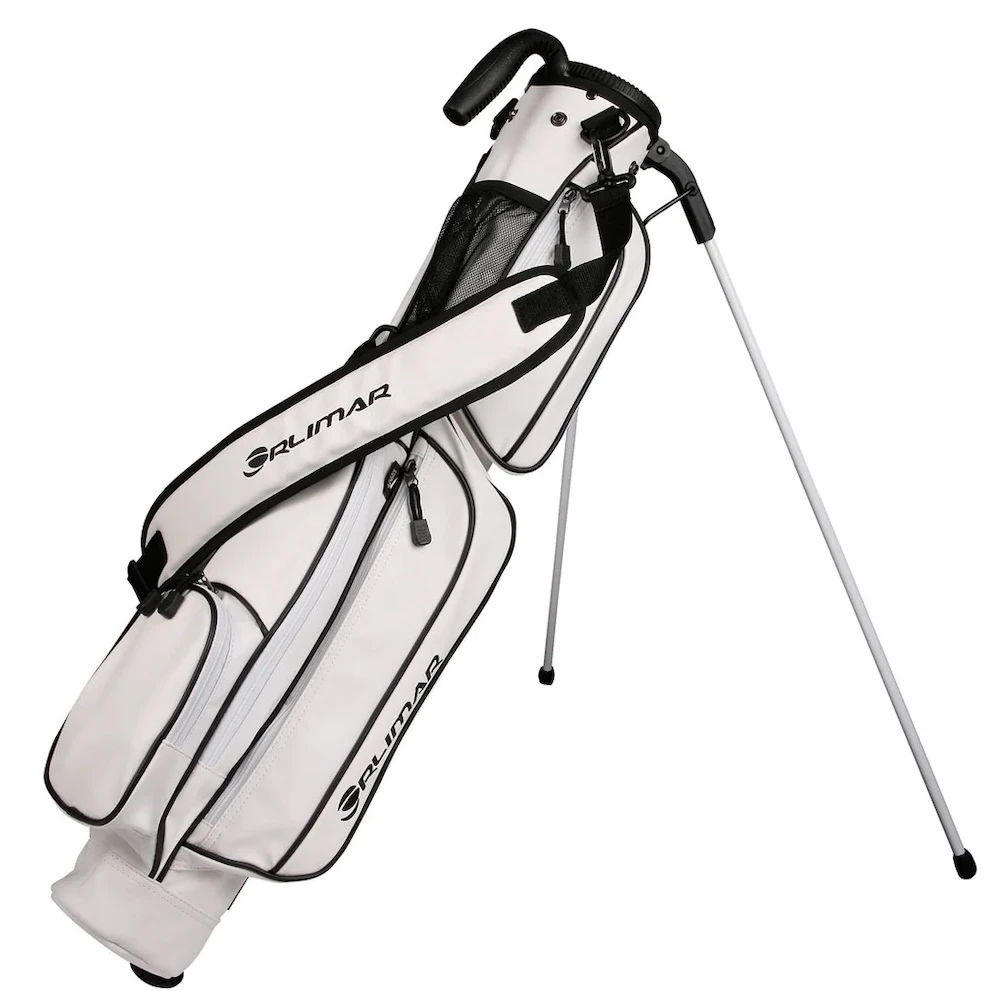
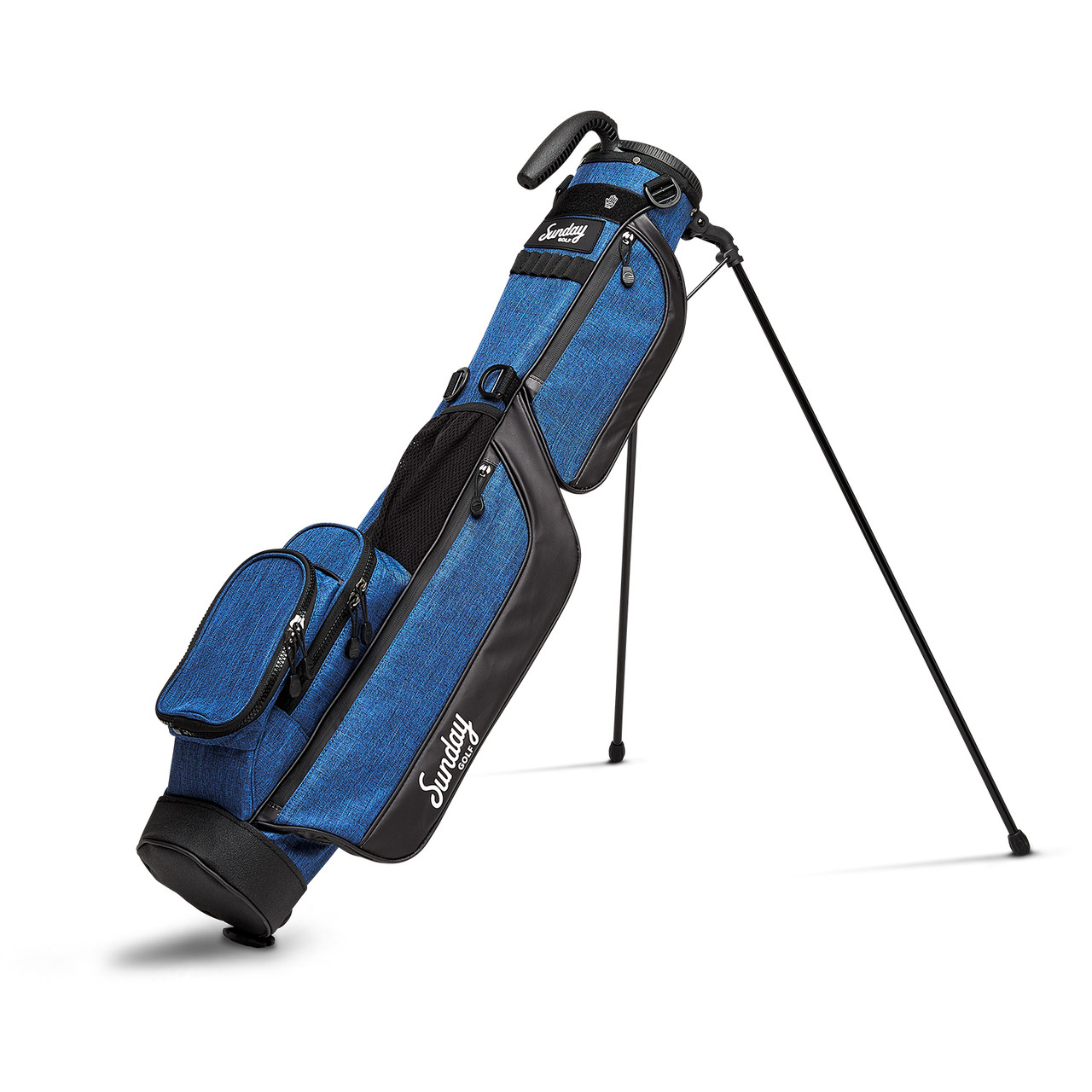
3 Sunday Bags Worth Carrying
Three different takes on the same idea. All of them swallow the Fab Five with room left over.
Why a Minimalist Golf Bag is Often Better for Beginners
Beyond the money, there is a strategic reason to carry fewer clubs: It eliminates decision paralysis.
Imagine you are 140 yards from the hole.
- With a full set: You might stress over whether to hit a hard 9-iron, a soft 8-iron, or a standard 7-iron. You spend 30 seconds worrying about the choice rather than the swing.
- With a Sunday Bag: You likely only have one club that can reach that distance. You pull it, you swing it, and you move on.
When you are learning, consistency is key. It is far better to learn how to hit one club confidently than to hit 10 different clubs poorly.
Read More on the Blog
-
›
Best Golf Balls for High Handicappers in 2025
Stop losing expensive balls. Find the perfect ball that balances distance, forgiveness, and price.
-
›
Stop Guessing: How to Find the Perfect Driver Shaft
If you decide to add a driver to your bag, make sure you pick the right shaft for your swing speed.
-
›
Find Your Launch: Best Women’s Irons for Slower Swings
Building a bag for a slower swing speed? These iron choices will help you get the ball in the air easier.
The Essentials: Building Your 5-Club Arsenal
If you only have 5 slots in your minimalist bag, every club has to earn its keep. Here is a widely recommended “Sunday Bag setup” for a beginner:
1. The Tee Box Club (3-Wood or High-Loft Driver)
You need something to get the ball in play off the tee. While drivers are fun, they are the hardest club to control. A 3-Wood is often cheaper to buy used, easier to control, and still goes plenty far for a beginner.
- Tip: If you do buy a driver, look for one with 10.5 degrees of loft or higher.
2. The Rescuer (4-Hybrid or 5-Hybrid)
This is your magic wand. Long irons (3, 4, and 5-irons) are notoriously difficult for beginners to hit because they require high swing speeds. A Hybrid replaces those irons. It has a wider sole that glides through the grass, making it perfect for long shots from the fairway or getting out of the rough.
3. The Workhorse (7-Iron)
The 7-iron is the “Swiss Army Knife” of golf. It sits right in the middle of the bag. You can use it for approach shots, punching out from under trees, and even bump-and-run chips around the green. This is the club you should spend the most time with at the range.
4. The Scorer (Pitching Wedge)
You need a club with high loft to get the ball up in the air when you are close to the green. A standard Pitching Wedge (PW) is ideal.
- Avoid the Lob Wedge: You might see pros using 60-degree lob wedges, but for a beginner, these usually result in “skulling” the ball across the green. Stick to the PW.
5. The Putter
The only club you are guaranteed to use on every single hole. Don’t worry about expensive technology here; just find a used putter that feels the right weight in your hands.
Ready to Build Your Bag?
You don’t have to hunt through garage sales to find a deal. Browse hundreds of certified pre-owned clubs to find your perfect “Sunday Bag” setup for a fraction of the price.
Shop Pre-Owned Golf Clubs ›How to Source Your Kit (Without Going Broke)
Now that you know what you need, here is how to find it cheap.
- The “Used Bin” Dive: Many golf shops have a bin of single irons, often for $5 to $10 each. Dig through it to find your 7-iron and Pitching Wedge. Look for “Cavity Backs” (clubs with a hollowed-out back), they are generally much more forgiving than flat “Muscle Back” or “Blade” clubs.
- Thrift Stores: Goodwill and Play It Again Sports can be goldmines for Sunday bags and putters. With some luck, you can sometimes find a vintage pencil bag for under $10.
- Online Marketplaces: Search eBay or Facebook Marketplace for “single irons” or “incomplete sets.” You can often piece together your “Fab Five” lineup for significantly less than the cost of one new driver.
Sunday Bag FAQ
The questions golfers ask most before switching to a minimalist setup.
What is a Sunday bag in golf?
A Sunday bag is a lightweight, minimally structured golf bag designed to carry roughly 5 to 7 clubs instead of a full 14-club set. Also called a pencil bag, it typically weighs 2 to 3 pounds and skips the large apparel and shoe compartments found on stand and cart bags. The name comes from the casual weekend rounds these bags were originally built for.
How many clubs fit in a Sunday bag?
Most Sunday bags hold 5 to 7 clubs comfortably. They use a simple two-way or two-compartment top rather than the 4-way or 14-way dividers found on larger bags. Larger models such as the Loma XL stretch to about 8 clubs, but once you need more than that, you are shopping for a stand bag instead.
Can you play golf with only 5 clubs?
Yes. The Rules of Golf set 14 clubs as a maximum, not a minimum, so carrying 5 clubs is completely legal in casual and competitive play alike. The USGA states that players may carry up to 14 clubs but are free to carry fewer. For beginners, a smaller set often speeds up club selection and simplifies practice.
Is a Sunday bag allowed in tournaments?
Yes. The Rules of Golf regulate the number and conformity of your clubs, not the bag that carries them, so a Sunday bag is legal in handicap and tournament rounds. The practical limitation is capacity: if your competitive set needs more than 7 clubs, a Sunday bag will not hold it.
What is the difference between a Sunday bag and a stand bag?
A Sunday bag carries 5 to 7 clubs, weighs about 2 to 3 pounds, and has two or three pockets. A stand bag carries a full 14-club set, weighs closer to 4 to 6 pounds, and adds a 4-way or 14-way divider top plus apparel, ball, and valuables pockets. Many modern Sunday bags now include retractable stand legs, so the presence of legs alone no longer separates the two categories.
Which 5 clubs should a beginner carry in a Sunday bag?
A widely recommended starter set is a 3-wood or high-loft driver for the tee, a 4-hybrid or 5-hybrid for long approach shots, a 7-iron as the all-purpose middle club, a pitching wedge for shots near the green, and a putter. This covers every distance a beginner realistically faces while keeping club selection simple.
Who should not use a Sunday bag?
Golfers who ride carts every round, play in wet climates that demand rain gear storage, or carry a full gapped set of wedges will find a Sunday bag too limiting. It suits walkers, par 3 and executive course players, range sessions, and beginners still building a set.

The Bottom Line
Golf is about the swing, the walk, and the outdoors, not just the logo on your bag.
The Sunday Bag Strategy allows you to enter the sport with lower financial risk. It keeps you physically fresh because your bag is light, and it mentally frees you up to focus on making contact with the ball.
So, grab a pencil bag, find your five faithful clubs, and head to the course. You might just find that carrying less helps you score more.
Danny Kapp — Golf Writer & Editor
Danny Kapp has spent 11 years writing about golf for Rock Bottom Golf, covering equipment, club selection, buying advice, and golf technology. His articles focus on helping everyday golfers understand their options and make more informed equipment decisions.

Sources & References
Rules claims in this article are drawn from the following primary sources.
- United States Golf Association. “Clubs,” Rules Hub. usga.org Cited for: the 14-club allowance is a maximum, and players may carry fewer.
- United States Golf Association. Rule 4: The Player’s Equipment, Rule 4.1b(1), Limit of 14 Clubs. usga.org Cited for: the club limit itself, and the provision allowing clubs to be added mid-round when a player starts with fewer than 14.
- The R&A. Rule 4: The Player’s Equipment, Rules of Golf. randa.org Cited for: confirmation that the same limit applies under the R&A code outside the United States.
- Manufacturer product specifications. Bag weights, divider configurations, and club capacities are taken from the manufacturer specifications listed on each product page linked above, current as of publication.
A note on pricing: golf bag prices change frequently. Cost ranges described in this article are general guidance rather than current quotes. Check the linked product pages for live pricing.
Last Updated on by Danny Kapp