

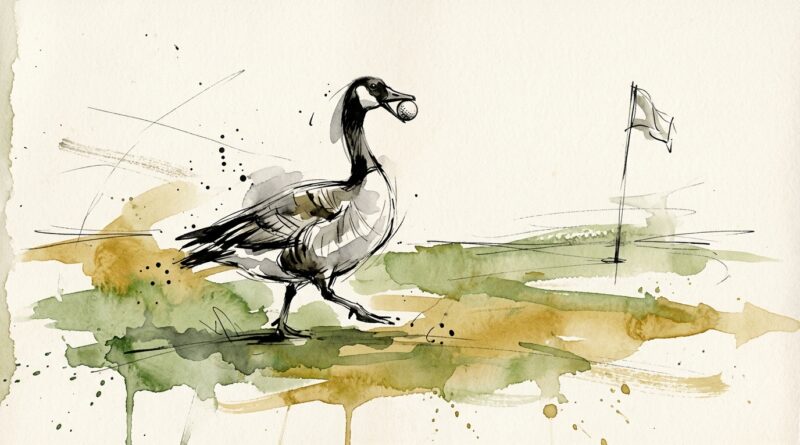
A Goose Stole My Golf Ball. Now What? The Animal Moved Golf Ball Rule
You flush your drive. It lands in the fairway, rolls out, and settles perfectly. Then a goose waddles over, looks you dead in the eye, and walks off with it. Before you start chasing waterfowl across the 4th hole, here is the good news: the animal moved golf ball rule is on your side, and in most cases it costs you nothing.
Quick Answer
If an animal moves or takes your ball while it is at rest, there is no penalty. Under USGA Rule 9.6, you replace a ball on its original spot (estimated if you don’t know it exactly), as long as it is known or virtually certain the animal did it. If the animal grabs your ball while it is still moving, you drop within one club-length of where it was picked up instead. If you only suspect an animal and can’t find the ball, it is a lost ball.

Key Takeaways
- Animals count as an “outside influence” under the Rules of Golf, the same category as spectators and other balls.
- Ball at rest moved or stolen by an animal: no penalty, replace it on the original spot (Rule 9.6).
- You can use another ball if the animal ran off with yours.
- The “known or virtually certain” test decides everything. A hunch is not enough. Without it, a missing ball is lost and costs you stroke and distance.
- Ball in motion picked up by an animal: no penalty, drop within one club-length of where the animal picked it up (Rule 11.1b).
- Ball in motion that bounces off an animal: no penalty, but you play it as it lies, wherever it ends up.
What Happens When an Animal Moves Your Ball at Rest?
You replace it with no penalty. In the Rules of Golf, any animal is an “outside influence,” which puts geese, crows, squirrels, foxes, and the neighbor’s golden retriever in the same bucket as spectators and stray balls. Rule 9.6 says that when an outside influence lifts or moves your ball at rest, you replace it on its original spot.
Two details make this rule friendlier than most golfers expect:
- You can estimate the spot. If you watched a crow pick your ball up from 200 yards away, you obviously don’t know the exact spot. Estimate it as best you can and replace a ball there.
- You don’t need the original ball back. The rule applies whether or not your ball is found, so if the goose keeps your Pro V1 as a souvenir, put another ball down.
If an animal nudged your ball and you only found out after you hit it, you’re also in the clear. You can’t be penalized for playing from a spot you had no way of knowing was wrong.
The “Known or Virtually Certain” Catch
Rule 9.6 only kicks in when it is known or virtually certain that an animal moved your ball. The USGA’s definition treats “virtually certain” as little real doubt: all reasonably available information shows it is at least 95% likely that the event happened.
In practice, that means:
- You or someone in your group saw it happen. Covered. Replace and play on.
- A playing partner swears they saw a hawk swoop on the fairway near your ball. Likely covered, since a reliable witness counts as reasonably available information.
- Your ball was in the fairway, it’s gone, and there are geese nearby. Not enough. Geese being in the neighborhood is possible, not virtually certain.
When the test isn’t met and you can’t find the ball, Rule 9.6 points you to stroke and distance under Rule 18.2. That’s a one-stroke penalty and a trip back to where you last played. (Our lost ball rule guide covers that process in detail.) This is also why hitting a provisional is smart any time your ball lands near wildlife you can’t see clearly.
Stock Up Before the Geese Do
The rules let you put down another ball when an animal runs off with yours, so it pays to carry spares. These recycled 36-ball bags keep your bag full without paying new-ball prices.
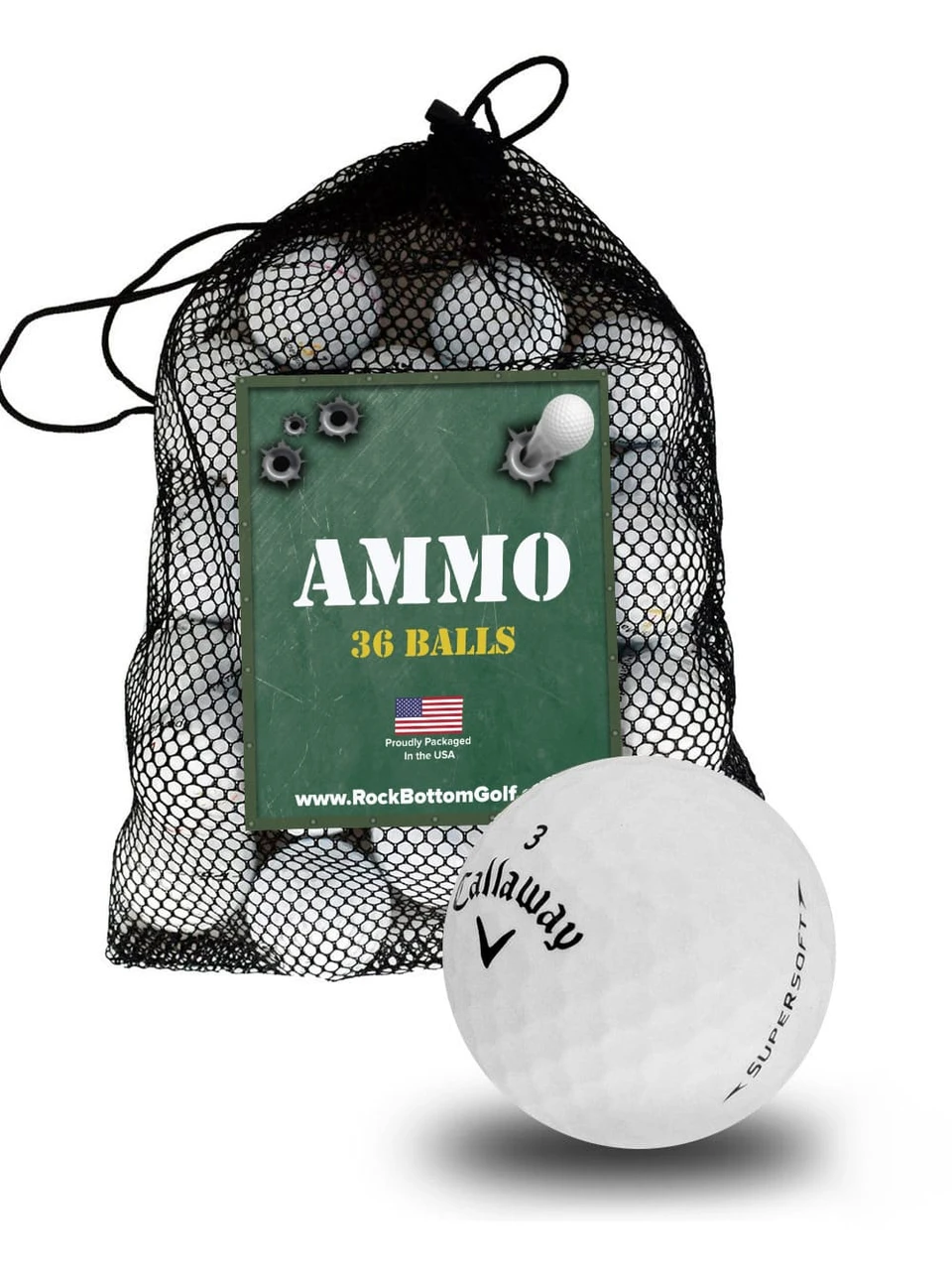
A budget-friendly mix of durable Surlyn-cover Callaway models like the Supersoft, Warbird, and Solaire. A smart pick for golfers who play around water, woods, or wildlife and would rather not mourn every lost ball.
Shop Callaway Used Balls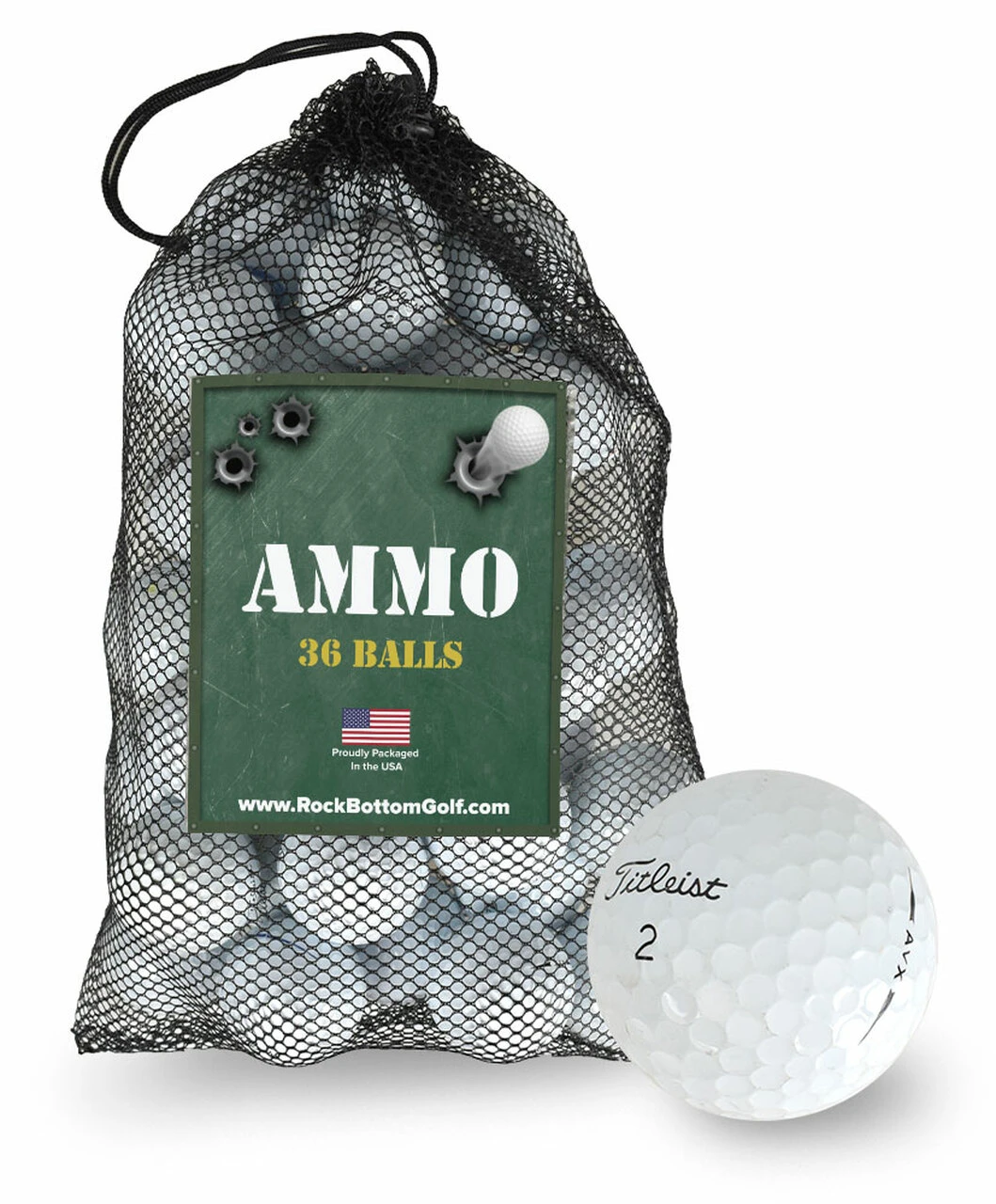
A mix of Titleist models from various years, graded Near Mint, which means light, mostly cosmetic wear at most. You get the Titleist feel you know without wincing when a crow flies off with one.
Shop Titleist Used Balls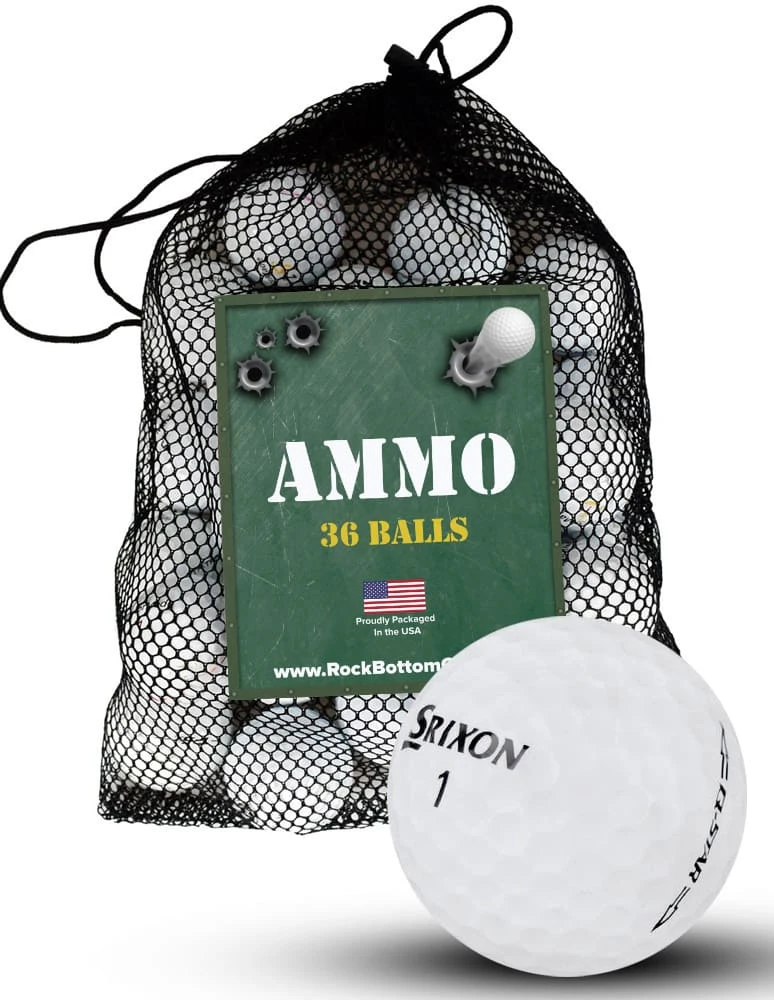
A Srixon mix that can include the Q-Star, Soft Feel, and Z-Star families, packed in an ammo-style bag built for restocking mid-round. Handy when your provisional ends up being your ball in play.
Shop Srixon Used BallsWhat If an Animal Grabs Your Ball While It’s Still Moving?
A ball in motion falls under a different rule. Rule 11.1 covers a moving ball that accidentally hits a person, animal, or object, and there is never a penalty. What you do next depends on what the animal did.
It deflected or stopped the ball. You play it as it lies. If a goose wanders into the path of your approach and your ball caroms into a bunker, that’s just bad luck. The Rules expect you to accept the result, good or bad.
It picked the ball up mid-roll. A 2023 clarification to Rule 11.1b treats the ball as having come to rest on the animal at the spot where it was picked up. You must not play it from wherever the animal finally drops it. Instead, you drop the original ball or another ball within one club-length of the spot right under where the animal grabbed it, no nearer the hole and in the same area of the course. If that spot is on the putting green, you place a ball there instead of dropping.
Your putt hits an animal on the green. If a ball played from the putting green hits an animal on the green, the stroke doesn’t count. You replace the ball and putt again.
Animal Moved Golf Ball Rule: Every Scenario at a Glance
| What happened | Rule | Penalty | What you do |
|---|---|---|---|
| Animal moves or takes your ball at rest, and you’re virtually certain of it | 9.6 | None | Replace a ball on the original spot (estimate if needed) |
| Ball is gone, an animal might have taken it, but you’re not virtually certain | 9.6 and 18.2 | One stroke | Stroke and distance: replay from where you last hit |
| Moving ball bounces off an animal (shot from off the green) | 11.1b | None | Play it as it lies |
| Animal picks up your moving ball (shot from off the green) | 11.1b, Exception 1 | None | Drop within one club-length of where it was picked up |
| Your putt hits an animal on the putting green | 11.1b, Exception 2 | None | Stroke doesn’t count; replace and putt again |
| You play the ball from where the animal dropped it instead of using the right spot | 14.7a | Two strokes (stroke play), loss of hole (match play) | Avoid this one |
Source: USGA Rules of Golf, Rules 9.6, 11.1, 14.7 and 18.2.
What to Do When an Animal Takes Your Ball, Step by Step
The whole process takes less time than the story you’ll tell about it at the 19th hole.
-
Note what you saw Was the ball moving or already stopped? Where exactly did the animal grab it? Ask your group what they saw too.
-
Apply the known or virtually certain test If you or a playing partner clearly saw the animal take or move the ball, you’re covered. If you’re guessing, treat it as a possibly lost ball.
-
Ball was at rest: replace it Estimate the original spot and replace a ball there (a new ball is fine). No penalty. On the putting green, place it on the estimated spot.
-
Ball was moving and the animal picked it up: drop it Find the spot right under where it was grabbed. Drop a ball within one club-length of that spot, no nearer the hole and in the same area of the course (fairway to rough is fine, rough into a bunker is not). No penalty.
-
Ball was moving and the animal knocked it somewhere: play it as it lies No penalty, no relief. Play the ball from wherever it came to rest.
-
Can’t confirm what happened and can’t find the ball: take stroke and distance Take stroke and distance (one penalty stroke), or play your provisional if you hit one.
If the animal is still standing over your ball looking territorial, give it a moment. Golf has no rule requiring you to fight a goose.
Bonus: Other Animal Rules Worth Knowing
Wildlife shows up in the Rules of Golf more often than you might think. Three more situations cover most of what you’ll run into.
Dangerous animal condition (Rule 16.2). If a dangerous animal near your ball could seriously injure you, you get free relief. Rule 16.2 gives examples like poisonous snakes, stinging bees, alligators, fire ants, and bears. You take relief at the nearest point where the danger no longer exists, and this rule even works inside a penalty area. A cranky goose probably doesn’t meet the “serious physical injury” bar, though anyone who has been chased by one might argue otherwise.
Animal holes (Rule 16.1). A hole dug by an animal is an abnormal course condition, so you get free relief if it affects your lie, stance, or swing. The USGA’s definition includes the loose dirt dug out of the hole and any track leading into it, but not holes made by worms or insects. Relief works the same way as a cart path drop: nearest point of complete relief, then one club-length.
Goose droppings. Animal dung is a loose impediment, so you can remove it without penalty. Just be careful: if removing a loose impediment causes your ball to move anywhere other than the putting green or teeing area, you get a one-stroke penalty and must replace the ball. On the green, there’s no penalty if the ball moves.
Animal Moved Golf Ball FAQ
Is there a penalty if an animal moves my golf ball?
No. Animals are outside influences, and Rule 9.6 says there is no penalty when an outside influence lifts or moves your ball at rest. Replace a ball on the original spot and keep playing.
A bird took my golf ball. Do I have to find it?
No. Rule 9.6 applies whether or not the ball is found, so you can replace a different ball on the estimated original spot. You do need to be virtually certain the bird took it.
What if I didn’t see the animal take my ball?
Then Rule 9.6 doesn’t apply unless someone else saw it or the evidence leaves virtually no doubt. If your ball is simply missing, it’s a lost ball and you take stroke and distance.
What if a dog picks up my ball while it’s still rolling?
Drop a ball within one club-length of the spot where the dog picked it up, no nearer the hole and in the same area of the course. There’s no penalty, and you never play it from wherever the dog dropped it.
My ball hit a squirrel and went out of bounds. Do I get a do-over?
No. A ball in motion that accidentally hits an animal is played as it lies, so a ball deflected out of bounds is out of bounds. The only exception is a putt from the green that hits an animal on the green, which you replay.
The Bottom Line
When an animal gets involved, ask two questions. Was the ball at rest or moving? And are you virtually certain the animal was responsible? A ball at rest taken by an animal goes back on its original spot for free. A moving ball grabbed by an animal gets a free drop where it was picked up. A moving ball knocked off course is played as it lies. And a ball that’s simply missing near some suspicious geese is a lost ball. Know those four outcomes and you can handle any goose, crow, or squirrel the course throws at you.
Keep Reading
No witness to the goose? Here’s how the three-minute search, stroke and distance, and provisional balls actually work.
Read the article →The principle behind every “bad luck” ruling, including the ball that bounces off wildlife into trouble.
Read the article →Geese are a nuisance. Lightning is a real hazard. Know when to stop play and where to take shelter.
Read the article →Writer/Editor: Danny Kapp is a passionate golf enthusiast and a 10-year veteran golf blog writer for Rock Bottom Golf, offering his unique perspective on the game. With a keen eye for detail, he covers various aspects of golf, ranging from technical insights to the latest trends in golf equipment and golf technology.

References
This article reflects the current (2023) edition of the Rules of Golf. The USGA and The R&A revise the Rules on a four-year cycle, so check usga.org/rules for updates.
- USGA: Rule 9, Ball Played as It Lies; Ball at Rest Lifted or Moved
- USGA: Rule 9, Player’s Edition (with definitions)
- USGA: Rule 11, Ball in Motion Accidentally Hits Person, Animal or Object
- USGA: Rule 11 Interpretations
- USGA: Rule 16, including Dangerous Animal Condition
- USGA: Abnormal Course Conditions (Animal Holes)
- National Club Golfer: An Animal Grabbed My Ball While It Was Moving
Last Updated on by Danny Kapp