


How Many Wedges Should You Carry? A Practical Wedge Gapping Guide
Quick answer: How many wedges should you carry? Most golfers should carry three or four wedges, counting the pitching wedge. The right number depends on your pitching wedge loft. Start with 4 to 6 degrees of loft between wedges, which typically produces roughly 10 to 15 yards between full-swing carry distances. Then verify the actual gaps by hitting each club. For example, a golfer with a 45-degree pitching wedge is usually well served by a 50, 54, and 58 degree wedge, or a 50 and 56 if bag space is tight.
Key Takeaways
- Most amateurs carry 3 to 4 wedges including the pitching wedge; many tour players carry 4.
- Start with your pitching wedge loft, not the lofts printed on a store display.
- Space wedges 4 to 6 degrees apart as a starting point, which typically produces roughly 10 to 15 yards between clubs, then confirm your real gaps by measuring carry.
- Modern pitching wedges are much stronger (often 43 to 45 degrees) than older ones (47 to 48 degrees), which is why a gap wedge is now close to essential.
- Partial swings can give a four-wedge setup 12 or more repeatable club-and-swing combinations inside 120 yards.
- The Rules of Golf limit you to 14 clubs, so adding a wedge means removing something else.
How Many Wedges Should You Carry for Your Skill Level?
There is no single correct number, but most golfers land in the same range. The table below shows common setups by skill level and equipment.
| Player type | Wedges (incl. PW) | Typical lofts | Why it works |
|---|---|---|---|
| Beginner / high handicap (20+) | 3 | PW, 52, 56 | Fewer decisions; the 56 handles bunkers and most chips |
| Mid handicap (10 to 19) | 3 to 4 | PW, 50, 54, 58 | Fills the scoring zone from 60 to 120 yards |
| Low handicap (0 to 9) | 4 | PW, 50, 54 or 56, 58 or 60 | Precise full-swing yardages and more shot options around the green |
| Game improvement irons (PW 43° or stronger) | 4 | PW, 48, 52, 56 | Closes the large gap left by a strong-lofted pitching wedge |
| Slower swing speed / senior | 3 | PW, 50 or 52, 56 | Yardage gaps shrink at slower speeds, and bag space is often better used on hybrids |
What Is Wedge Gapping?
Wedge gapping is the process of choosing wedge lofts so the full-swing distances between them are evenly spaced. The goal is to avoid “holes,” where a common yardage falls between two clubs, and “overlaps,” where two wedges fly nearly the same distance.
Good gapping matters because a large share of approach shots for amateur golfers happen inside 120 yards. If you have a 30-yard hole between your pitching wedge and sand wedge, you will face awkward half swings from ideal scoring distances every round.
Why Your Pitching Wedge Loft Is the Starting Point
Iron lofts have gotten stronger over the past few decades (often called “loft creep”). Manufacturers strengthen lofts to add distance, and the pitching wedge moves with the rest of the set. Sand wedges, however, have stayed around 54 to 56 degrees. That leaves a much bigger loft gap between the two than golfers used to have.
| Iron set type | Typical PW loft | Gap to a 56° sand wedge |
|---|---|---|
| Traditional / older sets | 47° to 48° | 8° to 9° |
| Modern players irons | 45° to 46° | 10° to 11° |
| Modern game improvement | 43° to 44° | 12° to 13° |
| Distance / super game improvement | 41° to 43° | 13° to 15° |
A 13-degree gap often means 30 or more yards between clubs. That single hole is the main reason gap wedges (also labeled approach wedges, A, AW, GW, or U) exist.
Before buying any wedge, look up your pitching wedge loft on the manufacturer’s spec sheet or have it measured. Forged clubs in particular can drift a degree or two with use.
| Wedge | Loft range | Common uses |
|---|---|---|
| Pitching wedge (PW) | 41° to 48° | Full approach shots, bump-and-run chips |
| Gap / approach wedge (GW, AW) | 48° to 52° | Full shots between PW and SW, longer pitches |
| Sand wedge (SW) | 54° to 56° | Bunker shots, pitches, full shots around 80 to 100 yards |
| Lob wedge (LW) | 58° to 62° | High soft shots, short-sided chips, tight pins, steep bunker lips |
How Much Loft Should Be Between Each Wedge?
A common starting point is 4 to 6 degrees between wedges. That spacing typically produces roughly 10 to 15 yards between full-swing carry distances, but your actual gaps depend on swing speed, strike quality, launch, shaft length, and club construction. Use loft spacing to build your setup, then confirm it with real carry numbers.
- 4 degrees apart typically produces tighter gaps, often around 10 yards per club. It suits golfers with faster swing speeds or those who want precise full-swing numbers.
- 6 degrees apart typically produces gaps of roughly 12 to 15 yards. It suits golfers who want fewer wedges and are comfortable controlling distance with partial swings.
- More than 6 degrees often leaves a hole in your yardages.
- Fewer than 4 degrees often creates overlap, where two wedges do the same job.
As a rough rule, each degree of loft is worth about 2.5 to 3 yards of carry for an average swing speed. Slower swings will usually see smaller yardage changes per degree; faster swings will see larger ones. These are estimates, so the only way to know your gaps is to measure them.
| Your PW loft | PW + 2 wedges | PW + 3 wedges |
|---|---|---|
| 48° | 52°, 56° | 52°, 56°, 60° |
| 46° | 50°, 56° | 50°, 54°, 58° |
| 45° | 50°, 56° | 50°, 54°, 58° |
| 44° | 50°, 56° | 49° or 50°, 54°, 58° |
| 43° | 48°, 54° | 48°, 52°, 56° |
| 41° to 42° | 47°, 53° | 47°, 52°, 57° or 58° |
If your setup has a lob wedge above 58 degrees, keep the 4 to 6 degree spacing below it and let the lob wedge be your specialty club rather than a full-swing distance club.
Approximate Wedge Distances by Loft
These are full-swing carry estimates, not total distance. Your own numbers will vary with swing speed, strike quality, ball, and conditions, so treat this as a starting point and measure your own.
| Loft | Slower swing (driver under 85 mph) | Average swing (85 to 100 mph) | Faster swing (100+ mph) |
|---|---|---|---|
| PW (44° to 46°) | 85 to 100 yds | 105 to 120 yds | 125 to 140 yds |
| 50° | 75 to 90 yds | 95 to 105 yds | 110 to 125 yds |
| 54° | 65 to 80 yds | 85 to 95 yds | 100 to 115 yds |
| 58° | 55 to 70 yds | 70 to 85 yds | 90 to 100 yds |
| 60° | 50 to 65 yds | 65 to 80 yds | 80 to 95 yds |
Estimates only. Carry distances vary with swing speed, strike quality, ball, and conditions. Measure your own.
How to Gap Your Wedges in 5 Steps
- Find your pitching wedge loft. Check the manufacturer’s spec sheet for your iron set, or have a club fitter measure it.
- Measure your full-swing carry distances. Hit 10 balls with each wedge on a launch monitor or at a range with a rangefinder. Drop the obvious mishits and use your average carry, not total distance.
- Find the holes. Write your carry numbers in order. Any gap larger than 15 yards is a hole worth filling. Any gap under 7 yards is an overlap.
- Pick new lofts in 4 to 6 degree steps, then verify. Work down from your pitching wedge to your highest-lofted wedge. Most golfers top out at 56, 58, or 60 degrees. After you have the clubs in hand, hit each one and confirm the carry gaps land where you expected. Adjust by a degree or two if a gap is still too large or too tight.
- Match bounce to your swing and course. Choose bounce based on how steep your swing is and how soft your turf and bunkers are (see the bounce table below). Then build a partial-swing chart for each wedge.
Filling the Gaps With Partial Swings
Full swings only give you one number per wedge. A simple partial-swing system, often called the “clock system,” can turn each wedge into several repeatable yardages. Picture your lead arm as the hand of a clock during the backswing.
| Backswing length | Approx. % of full carry | Example: 54° wedge with 90-yard full carry |
|---|---|---|
| 7:30 (hands about hip high) | 40% to 50% | 35 to 45 yds |
| 9:00 (lead arm parallel to ground) | 60% to 70% | 55 to 65 yds |
| 10:30 | 80% to 85% | 72 to 77 yds |
| Full swing | 100% | 90 yds |
| Wedge | 9:00 swing | 10:30 swing | Full swing |
|---|---|---|---|
| PW (45°) | 75 yds | 95 yds | 115 yds |
| 50° | 65 yds | 85 yds | 102 yds |
| 54° | 58 yds | 75 yds | 90 yds |
| 58° | 50 yds | 65 yds | 78 yds |
With three swing lengths and four wedges, you have 12 stock club-and-swing combinations covering roughly 50 to 115 yards, with useful overlap between several distances.
Choosing Wedge Bounce for Your Game
Bounce is the angle between the leading edge and the lowest point of the sole. More bounce helps the club glide through soft turf and sand instead of digging. Less bounce helps the leading edge get under the ball on firm, tight lies.
Bounce is much less standardized than loft. The same wedge name can come in very different bounce options depending on the brand, model, and sole grind, and some set-matching pitching and gap wedges carry more bounce than you might expect. Check the manufacturer’s spec sheet rather than assuming a bounce from the wedge label.
| Bounce level | Degrees | Best turf and sand | Best swing type |
|---|---|---|---|
| Low bounce | 4° to 6° | Firm fairways, tight lies, firm or coarse sand | Shallow swings (sweepers), players who open the face often |
| Mid bounce | 7° to 10° | Average conditions | Most golfers; the most versatile option |
| High bounce | 11° and up | Soft turf, fluffy or deep sand | Steep swings (diggers), players who take big divots |
If you are unsure, mid bounce on your gap wedge and mid to high bounce on your sand wedge is a safe place to start.
Do You Need a 60-Degree Wedge?
Not always. A 60-degree wedge is useful for short-sided chips, flop shots, and bunkers with high lips. However, many amateur golfers find a 56 or 58 degree wedge easier to control, especially on full swings.
A 60-degree wedge makes the most sense if:
- You play courses with firm, fast greens and elevated or well-guarded pins.
- You already hit your sand wedge consistently and want more shot options.
- Your gapping already works, and the 60 is a specialty club rather than a filler.
If you are a higher handicap golfer choosing between a 60 and a properly gapped 50, the gap wedge will usually save more strokes.
Making Room: What to Drop for a Fourth Wedge
Under Rule 4.1b of the Rules of Golf, you can carry a maximum of 14 clubs. 14-club rule Adding a wedge means taking something out.
| Club to remove | When it makes sense | Trade-off |
|---|---|---|
| 4 or 5 iron | You hit a hybrid higher and more consistently | Fewer knockdown and punch-out options |
| 3 wood | You rarely hit it well off the fairway | Less distance on long par 5 approaches |
| Extra hybrid | Its yardage overlaps with a fairway wood or iron | Less forgiveness on long approaches from the rough |
| Driving or utility iron | You mostly use it off the tee on a few holes | Fewer low, controlled tee shot options |
A good test: look at which club you used least over your last 10 rounds. That is usually the one to swap.
Common Wedge Gapping Mistakes
- Assuming the set “gap wedge” fits your gaps. Set-matching gap wedges vary by brand. Always check the actual loft.
- Leaving one large hole between PW and SW. This is the most common gapping problem with modern iron sets.
- Carrying two wedges only 2 or 3 degrees apart. You end up with two clubs doing one job.
- Ignoring bounce. The right loft with the wrong bounce can still make bunker and chip shots harder.
- Measuring total distance instead of carry. Wedge shots should be planned by carry, since roll changes with green firmness.
- Never rechecking lofts. Forged wedges can bend with regular use, and worn grooves change spin and distance.
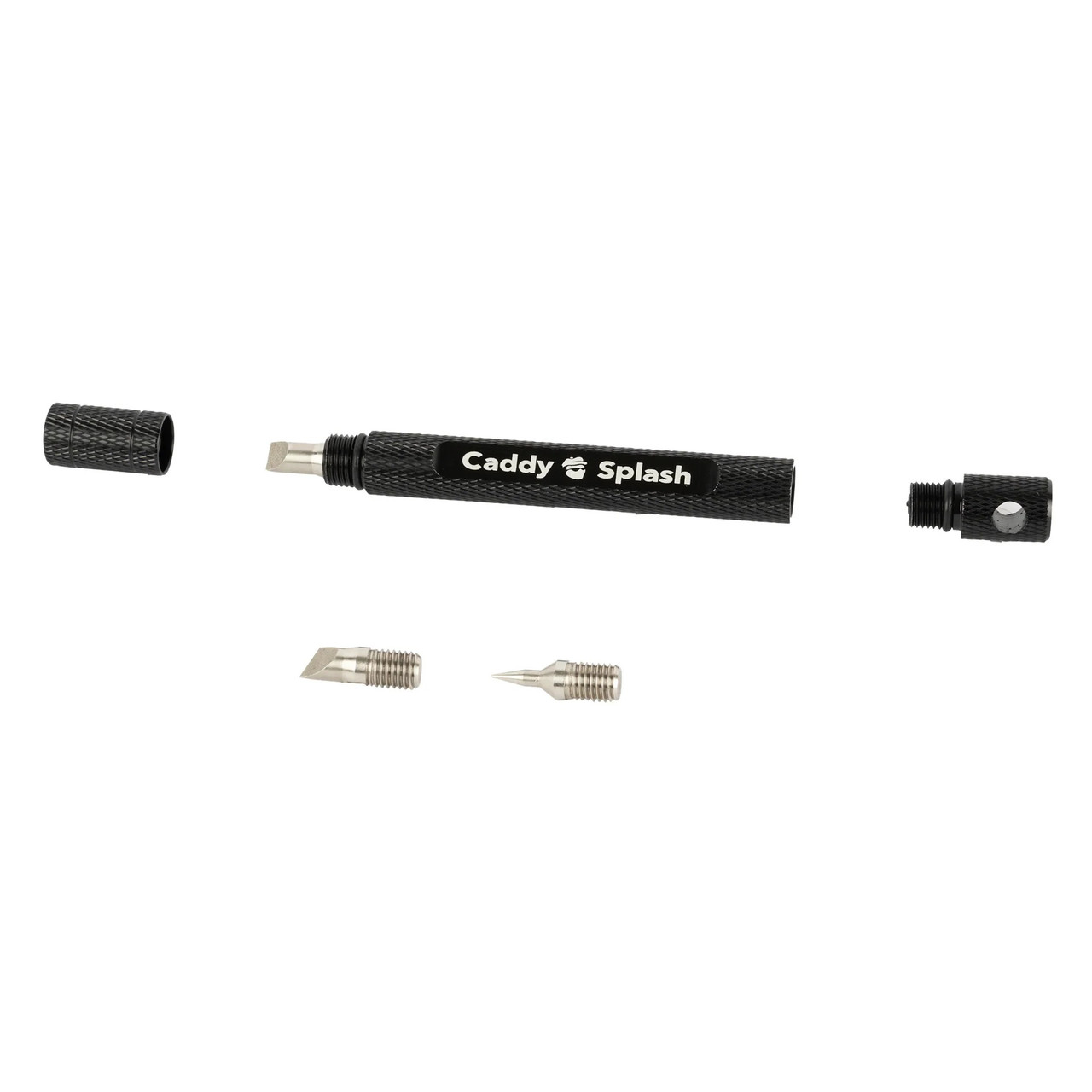
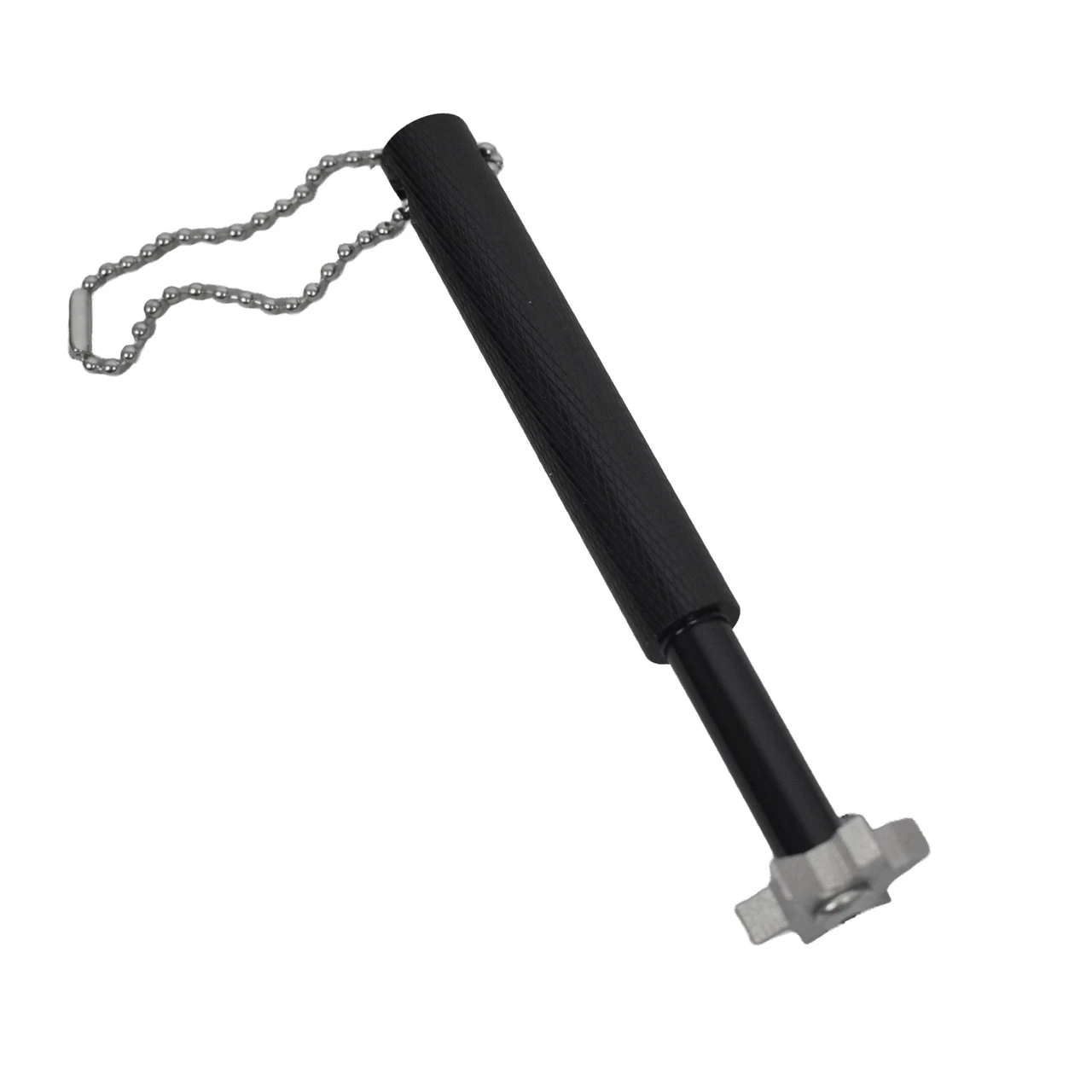
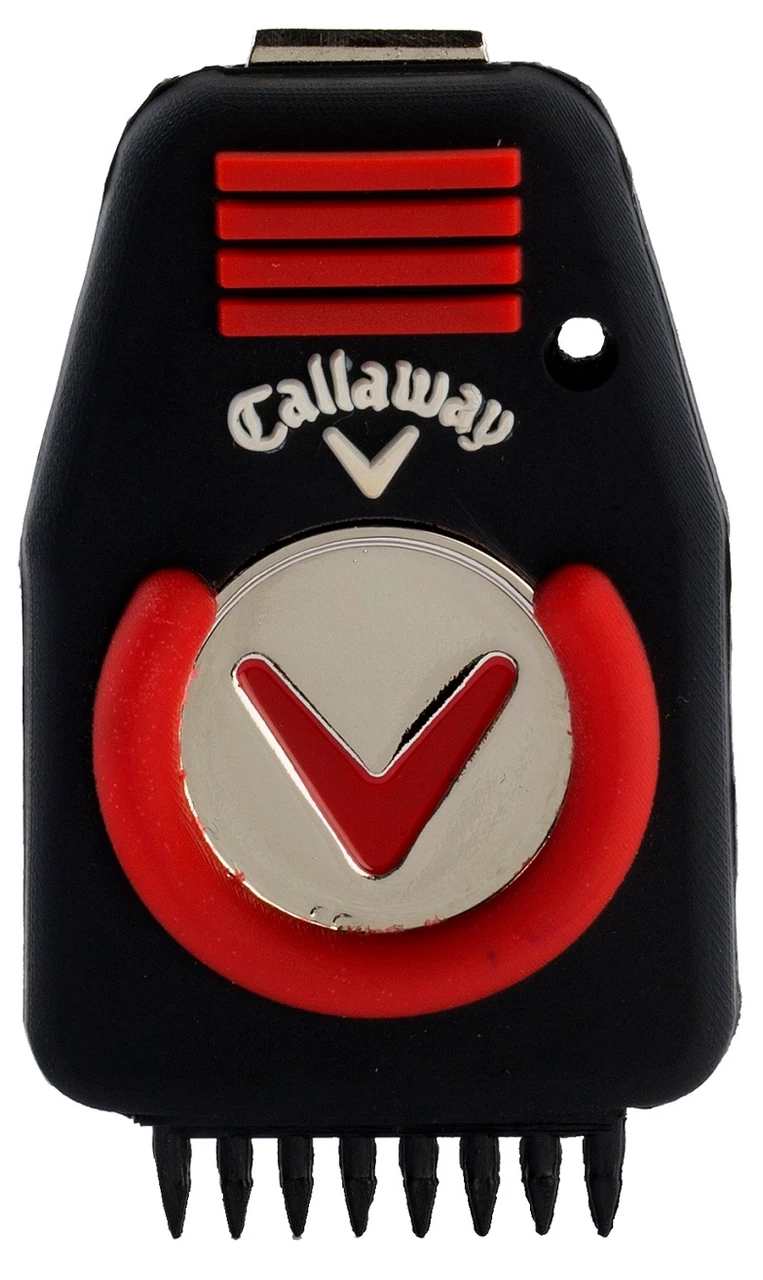
Worn or packed grooves cost you spin, especially from the rough and in wet conditions. A groove tool is a simple way to keep your wedges performing between replacements.
New vs. Pre-Owned Wedges for Gapping
Wedges are one of the best places to save money in your bag. Because grooves wear over time, even golfers who buy new tend to replace wedges more often than other clubs. Pre-owned wedges in good condition are an affordable way to fill a single loft gap or test a new setup before committing.
When shopping pre-owned, check that the loft and bounce are clearly marked, look for sharp, clean grooves, and inspect the face for heavy wear in the center.
Whether you need one wedge to close a yardage hole or want to rebuild your short game setup from scratch, Rock Bottom Golf has options at prices that leave room in the budget for a bucket of range balls.
The easiest way to fix a single gap. Pick the exact loft and bounce you need, whether that’s a gap wedge between your PW and sand wedge or a lob wedge for tight pins and short-sided chips.
Shop Wedges →Name-brand wedges for less. Every pre-owned club is graded by condition (Like New, Excellent, Very Good, or Value), and eligible clubs carry the RBG 30-Day Playability Guarantee, making it a low-risk way to try a new loft.
Shop Pre-Owned Wedges →Tip: Check your pitching wedge loft before you shop, then choose wedges 4 to 6 degrees apart as your starting point.
Frequently Asked Questions
How many wedges should a beginner carry?
Most beginners do well with three wedges: a pitching wedge, a gap wedge around 50 to 52 degrees, and a sand wedge around 56 degrees. This covers bunkers and short approaches without adding too many decisions.
Is carrying four wedges too many?
No. Four wedges (PW plus three) is common among low and mid handicap golfers, and many tour professionals carry four. It is only too many if it forces you to remove a club you use more often.
What wedges should I carry with a 44-degree pitching wedge?
A 50, 54, and 58 degree setup gives you even 4 to 6 degree gaps. If you only want two additional wedges, a 50 and 56 is a solid option.
Is a gap wedge the same as an approach wedge?
Yes. Gap wedge, approach wedge, A wedge, and U wedge all describe the club that sits between the pitching wedge and sand wedge, usually 48 to 52 degrees.
How many yards should be between each wedge?
Aim for roughly 10 to 15 yards between full-swing carry distances. Spacing lofts 4 to 6 degrees apart is a good starting point for getting there, but measure your actual carries to confirm, since swing speed and strike quality change the results.
Should my wedges match my iron set?
Your pitching wedge and gap wedge can come from your iron set, since they are mostly used for full swings. Many golfers switch to specialty wedges for their sand and lob wedges because those models offer more bounce and grind options for shots around the green.
How often should I replace my wedges?
It depends on how often you play and practice. Worn grooves reduce spin, especially from the rough and in wet conditions. Check your grooves at least once a season, and replace your most-used wedges when shots start releasing more than they used to.

The Bottom Line
Most golfers should carry three or four wedges, but the number matters less than the spacing. Start with your pitching wedge loft, space each wedge 4 to 6 degrees apart as a starting point, verify the real gaps by measuring your carry distances, match bounce to your swing and course, and learn two or three partial swings with each club. Do that, and every yardage inside 120 yards has a club and a swing that fits it.
Danny Kapp — Golf Writer & Editor
Danny Kapp has spent 11 years writing about golf for Rock Bottom Golf, covering equipment, club selection, buying advice, and golf technology. His articles focus on helping everyday golfers understand their options and make more informed equipment decisions.

References
- USGA. Rules of Golf, Rule 4: The Player’s Equipment. Rule 4.1b sets the 14-club limit.
- USGA. Equipment Rules, Rule 6 Interpretations: Club Face. Covers clubs with altered face markings, such as re-grooved clubs, and groove conformance.
Last Updated on by Danny Kapp