

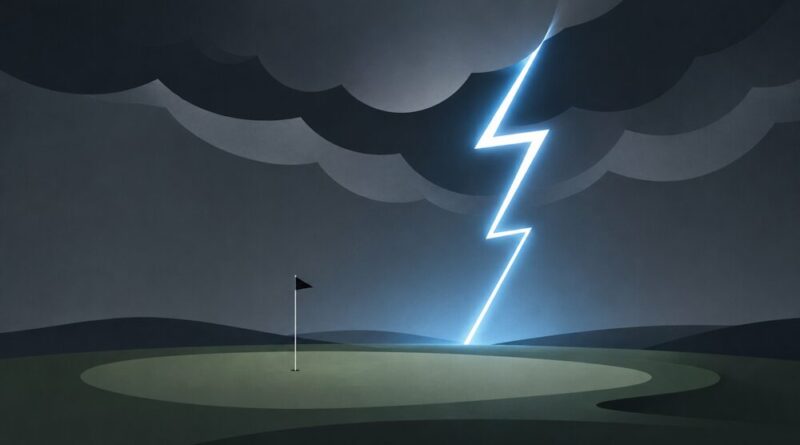
Golf Course Lightning Safety: When to Walk Off and When It’s Okay to Play On
There may be no worse feeling than standing on the 7th tee, finally swinging well, when the sky starts turning the color of a bruise. Do you finish the hole? Sprint for the clubhouse? Wait it out under that big oak by the cart path? Golf course lightning safety is one of those topics nobody bothers with until it’s too late, and golfers can be especially exposed when a storm rolls in. You’re often the tallest thing standing in a wide, open, frequently damp field, holding a bag full of metal sticks.
This guide breaks down what actually keeps you safe, with guidance based on National Weather Service recommendations.

- The moment you hear thunder, head for safe shelter. If you can hear it, you’re close enough to be struck.
- Wait at least 30 minutes after the last thunder before going back out.
- Safe shelter means a substantial enclosed building or a hard-topped vehicle with the windows up. Golf carts, trees, and open rain shelters do not count.
- Check the forecast before you tee off and know where you’ll take cover if the weather turns.
- There is no safe place outside during a thunderstorm.
Why Golfers Are More Exposed Than Just About Anyone
Lightning can strike when thunderstorms are nearby, and a golf course often leaves players in open areas with limited shelter. You’re standing in the open with very little around you, which means on a flat fairway you can easily become the high point. Add a raised metal club, wet grass, water hazards, and the fact that the clubhouse is usually a long way off, and you’ve got a recipe that weather experts specifically warn about.
It’s not paranoia, either. The National Weather Service offers lightning safety toolkits for golf facilities as part of a broader venue safety program to help protect players and staff. When the federal weather agency creates a program just for your sport, that tells you something about the risk.
The One Golf Course Lightning Safety Rule That Matters Most
If you remember nothing else, remember this: when thunder roars, go indoors. The National Weather Service’s guidance is straightforward. The moment you hear thunder, you should head for safe shelter right away.
Then comes the part golfers love to ignore: you should not head back out until at least 30 minutes have passed since the last thunder. Not five minutes. Not “the sun’s poking out now, let’s go.” At least 30 minutes after the last rumble. Yes, it kills the round. It also keeps you breathing.
The Myths That Get Golfers Hurt
A lot of bad decisions on the course come from a few stubborn misunderstandings about how lightning behaves.
“The storm isn’t even over us yet.” That’s exactly the dangerous window. According to the National Weather Service, lightning can occur before rain starts, during the storm, or after the rain has passed. The sky overhead can look perfectly manageable while a bolt is reaching out from miles away.
“It’s not raining where I am, so I’m fine.” You can hear thunder from about 10 miles away, and lightning can occur even when the storm still looks distant. That means a strike can hit you under blue sky while the actual storm cloud is still well off in the distance. If you can hear thunder, distance is not protecting you.
“I’ll just hop in the cart and ride it out.” A golf cart is not safe shelter. The protection a car offers comes from its hard metal roof and frame channeling the charge around you, and an open-sided cart gives you none of that. Treat a cart like standing in the open, because that’s essentially what it is.
Three solid 36-ball ammo bags worth a look, from premium Mint condition down to budget-friendly practice picks.



Where to Actually Go (and Where Not to)
Safe shelter is more specific than most golfers assume. The two safe options are a substantial fully enclosed building with wiring and plumbing (the clubhouse, the pro shop, a maintenance building with walls and a roof) or a hard-topped metal vehicle with the windows closed.
Just as important is knowing what is not safe, because these are the spots golfers instinctively run to:
- That lone tree, or any tree. Standing under an isolated tall tree is one of the most dangerous things you can do in a storm.
- Open-sided rain shelters and gazebos. Those structures block rain, not lightning, and the NWS says they are not safe.
- Anything tall and metal. Flagsticks and fences should be avoided, and you should leave your golf clubs behind when seeking shelter.
- Near or in water. Ponds and water hazards are exactly where you don’t want to be.
The honest takeaway from the experts is a hard one for competitive golfers: there is no safe place outside during a thunderstorm. Shelter means getting inside or into a hard-topped vehicle, full stop.
The Pre-round Habit That Prevents the Whole Problem
The best way to handle a storm is to not get caught in one. Before you tee off, check the forecast on a reliable source like weather.gov or a radar app. If the afternoon is loaded with storm chances, plan an earlier tee time or build in the expectation that you may need to bail.
Once you’re out there, make a habit of glancing at the sky and keeping an eye on the radar between holes, especially in summer when afternoon storms can build fast. If you’re playing in a group, agree ahead of time on where you’ll head if the weather turns and where the nearest safe shelter is. Knowing your exit before you need it is the difference between a calm walk to the clubhouse and a panicked sprint.



Frequently Asked Questions
Is it safe to keep playing if I only hear distant thunder?
No. If you can hear thunder, the storm is close enough to put you at risk, even if it looks far away or the sky overhead is clear. Head for safe shelter as soon as you hear it.
How long should I wait after lightning before going back out?
Wait at least 30 minutes after the last clap of thunder before returning to the course. Resuming too early is one of the most common ways golfers get caught out.
Is a golf cart safe during a thunderstorm?
No. A golf cart is open-sided and does not offer the protection of a hard-topped metal vehicle. Treat riding out a storm in a cart as no safer than standing in the open.
Are the rain shelters on the course safe from lightning?
No. Open-sided shelters and gazebos block rain, not lightning, and the National Weather Service does not consider them safe. Use a substantial enclosed building or a hard-topped vehicle instead.
Where should I go for shelter on a golf course?
Head for a substantial fully enclosed building such as the clubhouse or pro shop, or a hard-topped vehicle with the windows closed. Avoid trees, water, and anything tall or metal on the way.

The Bottom Line
Golf course lightning safety comes down to a few non-negotiables: check the forecast before you play, head for a substantial building or a hard-topped metal vehicle the instant you hear thunder, skip trees and open shelters entirely, and wait at least 30 minutes after the last thunder before going back out. No round, no streak, and no “I was finally playing well” is worth the risk. The course will still be there tomorrow.
Source and further reading:
- National Weather Service, Lightning Safety: weather.gov/safety/lightning
- NOAA, Lightning Safety guidance: noaa.gov/jetstream/lightning/lightning-safety
- National Weather Service, Lightning Safety Toolkits (includes the golf facility program): weather.gov/safety/lightning-toolkits
Danny Kapp — Golf Writer & Editor
Danny Kapp has spent 11 years writing about golf for Rock Bottom Golf, covering equipment, club selection, buying advice, and golf technology. His articles focus on helping everyday golfers understand their options and make more informed equipment decisions.

Last Updated on by Danny Kapp