


Golf Man Cave Ideas on a Budget: How to Build a Golf Room You’ll Actually Use
Every golfer has a spot in the house that slowly fills up with golf stuff. A bag leans in the corner, a coffee can of logo balls sits on a shelf, and a putter somehow lives behind the couch. The good news is that you’re already halfway to a golf room. These golf man cave ideas on a budget will help you turn that corner, basement, garage bay, or spare bedroom into a space you’ll actually use all winter, without spending simulator money on day one. Around here, we know a thing or two about caves.
Key Points
- The most budget-friendly golf man cave picks one “anchor” activity first: putting, hitting, or hanging out.
- A putting corner tends to be the cheapest, quietest, and most space-friendly place to start, and it works in almost any room.
- Measure your ceiling before you buy a hitting net or launch monitor. Many full-swing setups call for a room around 10 feet tall.
- Gear you already own (retired clubs, old scorecards, logo balls) can cover most of your decor for free.
- Pre-owned clubs, open box returns, trade-in credit, and holiday sales can stretch the budget for everything else.
What Are the Best Golf Man Cave Ideas on a Budget?
The best budget golf man cave ideas share one rule: build around a single activity first, then add to it over time. Trying to squeeze a putting green, a hitting bay, a bar, and a wall of memorabilia into one weekend is how budgets (and spare bedrooms) get blown up. Pick the thing you’ll do most often and let the rest of the room grow around it.
Most golf rooms fall into one of three anchors:
- The putting corner. A mat, a few putting aids, and a house putter. Fits in almost any room and doesn’t need extra ceiling height.
- The hitting bay. A net and a hitting mat for real swings. Needs more space, but it keeps your swing in shape through the off season.
- The display den. A hangout space built around your golf history: clubs, flags, scorecards, and a spot to watch the weekend’s final round.
Here’s how those options stack up when you’re watching costs:
| Setup | What It Includes | Space Needed | Relative Cost |
|---|---|---|---|
| Display Den | Gear you own, framed scorecards, flags, a den caddie, drinkware | Any room or wall | Lowest |
| Putting Corner | Putting mat, putting aids, a house putter | A strip of floor along one wall | Low |
| Hitting Bay | Net, hitting mat, side protection | Full swing clearance and depth | Moderate |
| Sim-Ready Room | Hitting bay plus a launch monitor and a screen you already own | Full swing clearance plus room for the monitor | Highest |
Start With the Golf Gear You Already Own
Before you buy a single thing, empty the garage and the closet. Most golfers are sitting on enough memorabilia to decorate a golf man cave for free, and personal pieces make the room feel like yours instead of a catalog page.
- Retired clubs. That persimmon driver, your first putter, or the 7 iron you made your only eagle with can hang on simple wall hooks or sit in a shadow box.
- Scorecards and yardage books. Frame the card from your best round, a buddies trip, or a bucket-list course. Cheap frames work fine.
- Logo balls. Instead of a coffee can, line up the balls from courses you’ve played on a shelf or in a clear jar. It becomes a conversation piece fast.
- Pin flags. Many pro shops sell their flags, and a signed or framed flag from a memorable round is classic golf room decor.
- An old bag. A retired stand bag makes a handy umbrella, alignment stick, and spare club holder by the door.

Build a Putting Corner First
If you only do one thing, make it a putting corner. It has the smallest footprint of any golf room setup, it’s quiet enough to use while the game is on, and it doesn’t care how low your ceiling is. It’s also the part of the room your friends and kids will actually play with, which is half the fun.
Start with a putting mat along a wall so the ball has something to stop against. From there, a few inexpensive putting aids (alignment mirrors, gates, or a return cup) can turn idle putting into real practice. A couple of simple drills worth keeping in rotation:
- Gate drill. Set two tees just wider than your putter head and roll putts through without touching either one. It tends to expose a face that’s open or closed at impact.
- Ladder drill. Roll balls to targets at increasing distances without hitting the one in front. It’s good for speed control, which is where most three-putts come from.
Then give the room a dedicated “house putter” so your gamer can stay in the bag. A pre-owned putter is a smart, low-cost way to do it, and it’s a great excuse to try a head shape you’ve been curious about. If you’re torn on style, our guide to blade vs mallet putters can help.
Add a Hitting Net (Once You’ve Measured the Ceiling)
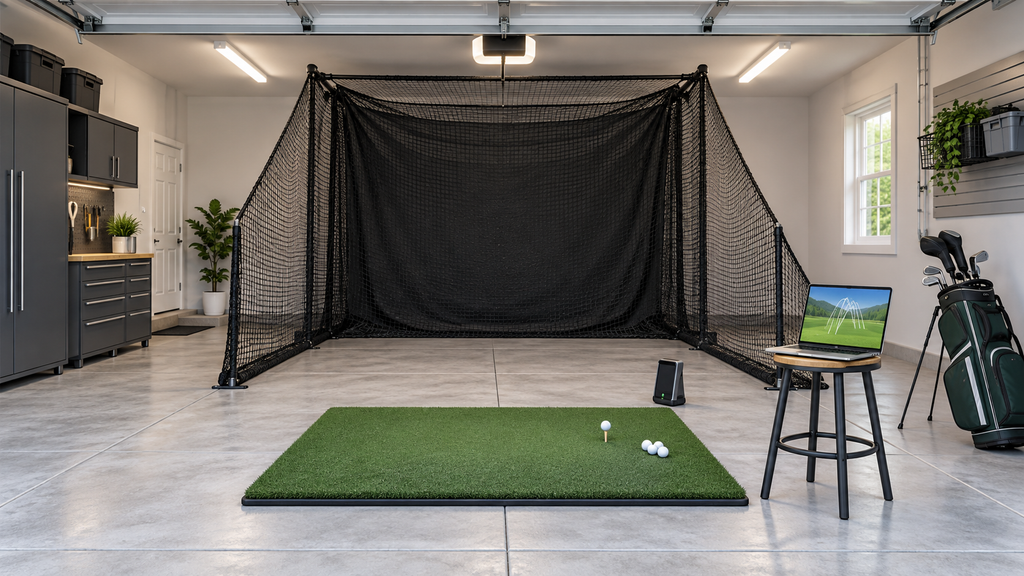
A net and mat let you make full swings all winter, but this is the step where measuring matters more than shopping. Ceiling height is the number that decides whether your room can handle a driver, a 7 iron, or just wedges. Launch monitor maker Rapsodo suggests a room around 10 feet high, 14 feet wide, and 17 to 18 feet deep as a solid all-around target for a full-swing setup, with adjustments for taller golfers.
The simplest test is free: stand where you’d hit, take a slow-motion swing with your driver, and see what you clip. If the ceiling, a light fixture, or a ceiling fan gets in the way, you can still build a hitting bay. Just plan it around wedges and short irons, which is where most of us could use the reps anyway.
A few setup tips that can save headaches (and drywall):
- Give yourself extra room on the side, not just in front. Shanks happen, and they don’t go into the net.
- Keep TVs, lamps, and windows well behind and away from the hitting area.
- Choose a hitting mat with some cushion if you’ll be on a concrete floor, since a thin mat can be rough on your wrists and elbows.
Browse golf nets and mats to see what fits your space.
Is a Golf Simulator Worth It for a Budget Man Cave?
It can be, as long as you build up to it instead of buying it all at once. Home and indoor golf isn’t a niche anymore. The National Golf Foundation reports that almost 38 million Americans played off-course golf in 2025, a group that includes simulators, ranges, and venues like Topgolf. That kind of popularity is a big reason personal launch monitors have become more accessible over the last few years.
The budget-friendly path looks like this: build your hitting bay first, then add a launch monitor later and pair it with a screen you already own, like a TV, tablet, or laptop. You’ll get swing data and practice games right away, and you can decide down the road whether a full enclosure and projector are worth the upgrade. Check each launch monitor’s space requirements before you buy, since some need more room behind the ball than others.
Golf Man Cave Decor and Storage That Doesn’t Look Like Clutter
Once the main activity is set, a few finishing touches pull the golf room together. The trick is giving every loose item a home so the space looks intentional.
- Den caddies. Den caddies are mini staff bag designs that hold balls, tees, and accessories. They look great on a desk, bar, or shelf and keep the small stuff corralled.
- A house ball. Custom logo balls with your name, a family crest, or a nickname for the room make a fun signature piece (and a great gift for the regulars).
- The bar cart. Golf-themed drinkware and a cooler handle tournament Sundays without a trip to the kitchen.
- Games for guests. Not everyone wants to grind on putting drills. A few picks from golf games and novelty items or some novelty balls keep the room fun for non-golfers too.
- A golf bookshelf. Instruction books, course guides, and golf history titles fill a shelf nicely and actually get read on rainy days.
Smart Ways to Save on Your Golf Room
A budget golf man cave is mostly about timing and patience. A few ways to stretch every dollar:
- Build in phases. Start with the anchor, live with it for a month, then add the next piece. You’ll buy fewer things you don’t use.
- Shop the calendar. Late fall and the holiday season tend to bring some of the year’s best deals on golf gear. Our month-by-month discount calendar breaks down when to buy what.
- Go pre-owned or open box. Pre-owned clubs and open box returns are a natural fit for a house putter or a dedicated set of practice wedges.
- Turn old clubs into credit. If your garage is full of clubs you’ll never hit again, the Club and Ball Trader can turn them into store credit toward nets, mats, or tech.
- Make a wish list for the holidays. Family members who don’t know a hybrid from a hockey stick can still nail a gift with a Rock Bottom Golf gift card toward your next piece.
Shop the Golf Room
Golf Man Cave FAQs
How much does a golf man cave cost?
It depends on which activity you build around. A display den made from gear you already own can cost next to nothing, and a putting corner is usually the next most affordable option. A hitting bay with a net and mat costs more, and adding a launch monitor is typically the biggest single expense. Building in phases lets you spread the cost out over time.
Can I build a golf man cave in a small room?
Yes. A putting corner fits along a single wall and doesn’t need extra ceiling height, so it works in most spare rooms, offices, and basements. Pair it with a wall of golf memorabilia and a small storage piece like a den caddie, and you have a complete golf room without full-swing space.
How high does a ceiling need to be to swing a driver indoors?
Many simulator makers recommend a room around 10 feet tall for comfortable full swings, though the right number depends on your height and swing. The easiest check is a slow-motion driver swing where you plan to hit. If you clip the ceiling or a fixture, plan your hitting bay around wedges and short irons instead.
What is a den caddie?
A den caddie is a small storage piece designed to look like a mini staff bag. It holds golf balls, tees, and small accessories, and it’s a popular decor item for offices, golf rooms, and man caves.
What are good gifts for a golfer’s man cave?
Putting aids, a den caddie, custom logo golf balls, golf drinkware, and golf games all make easy, budget-friendly gifts. If you’re not sure what they already have, a golf gift card lets them put it toward a bigger piece like a hitting net or launch monitor.
Keep Reading
The Bottom Line
The smartest golf man cave ideas on a budget start small and build over time. Pick one anchor, usually a putting corner since it fits almost any room, and decorate with gear you already own like retired clubs, scorecards, and logo balls. Measure your ceiling before buying a net or launch monitor, since many full-swing setups call for a room around 10 feet tall. Then stretch your budget with pre-owned clubs, open box deals, trade-in credit, and holiday sales until the room feels complete.
Ready to get started? Browse golf training aids at Rock Bottom Golf and build your golf room one piece at a time.
Writer/Editor: Danny Kapp is a passionate golf enthusiast and a 10-year veteran golf blog writer for Rock Bottom Golf, offering his unique perspective on the game. With a keen eye for detail, he covers various aspects of golf, ranging from technical insights to the latest trends in golf equipment and golf technology.

Sources
Last Updated on by Danny Kapp