


Golf Ball Compression by Swing Speed: A Practical Chart (and Where It Breaks Down)
Golf ball compression is the most argued-about spec in the game and the least understood. The pitch you have heard a hundred times goes like this: slow swing, soft ball, more distance. It is tidy, it gets repeated on every forum and packaging insert in golf, and it is only about half right.
The half that is right is worth knowing. The half that is wrong has probably cost some of you yardage and a lot of you green-holding spin. So below is the chart you came for, and then the four places that chart falls apart.
The short answer
Use compression to avoid an obvious mismatch, not to chase yardage. Below about 85 mph, the distance gap between a soft ball and a firm one is small enough that your strike quality erases it. Above about 105 mph, a very soft ball genuinely costs you ball speed. Everywhere in between, the cover material and the spin profile matter more than the compression number on the box.

What Compression Actually Measures
Compression is a firmness rating. A ball is squeezed under a known load and a machine records how far it deforms. Softer balls deform more and get a lower number. Firmer balls resist and get a higher one. Most modern balls land somewhere between roughly 30 and 110.
That is the whole concept. What it is not, and this matters more than anything else in this article, is a regulated specification. The USGA and R&A write rules for a ball’s weight, diameter, symmetry, initial velocity and total distance. They write nothing at all about compression. There is no official scale, no required test, and no obligation to publish a number.
Manufacturers measure it several different ways. Atti compression, Riehle compression and direct load-deflection readings all produce different values for the same golf ball. So when you compare a “90” from one brand against a “90” from another, you are frequently comparing two numbers that were never generated the same way.
Golf Ball Compression by Swing Speed: The Practical Chart
With that caveat firmly in place, here is the working chart. Treat the compression column as a starting range, not a prescription.
| Driver Swing Speed | Typical Driver Distance | Common Compression Range | What Actually Matters Most |
|---|---|---|---|
| Under 75 mph | Under 175 yds | 30 to 55 | Getting the ball airborne. Launch height beats everything else. |
| 75 to 85 mph | 175 to 200 yds | 40 to 70 | Carry and descent angle. Softness is close to irrelevant here. |
| 85 to 95 mph (the average male amateur) |
200 to 225 yds | 60 to 90 | Cover material. Urethane vs. ionomer changes your short game more than compression does. |
| 95 to 105 mph | 225 to 250 yds | 70 to 95 | Driver spin control paired with greenside grab. |
| 105 mph and up | 250+ yds | 90 and up | Ball-speed retention, launch efficiency and driver-spin control. Test the actual ball model rather than relying on compression alone. |
Swing speed benchmarks reflect TrackMan launch monitor data for amateur players. Distance figures are total (carry plus roll) and align with Arccos on-course tracking, which puts the average male amateur near 224 yards off the tee.
Four Places That Chart Breaks Down
Every compression chart on the internet stops right where the one above stops. Here is what happens when you keep going.
1. You are already compressing the ball
This is the big one. The idea that a slower swinger “can’t compress” a tour ball is simply not how impact works. Independent testing has found the core deforming meaningfully at speeds as low as 60 mph. Everybody compresses the golf ball. Everybody.
The bigger risk runs in the other direction: at higher speeds, some softer ball designs can produce less efficient ball speed, launch or spin. That is a full-design result, not simply “over-compression.” A slower player does not fail to activate a firm tour ball; they may simply prefer a different flight, feel, spin profile or price point.
2. “Soft is slow” is true, but the penalty scales with speed
In robot testing, some softer ball designs produce slightly lower driver ball speed, particularly at higher clubhead speeds. But compression is not the cause by itself: core construction, layers, cover, aerodynamics, launch and spin all affect the result. What gets lost in compression debates is the magnitude, and the fact that each ball must be judged as a complete design.
At 110 mph, a small ball-speed difference can become meaningful distance. At 80 mph, the difference between two suitable balls is often smaller than the normal variation caused by strike quality, launch and weather. If you swing in the low 80s and below, do not agonize over compression; focus first on a ball’s flight, approach-shot stopping power, feel and cost.
3. Slower swings may need more spin, not less
Here is the counterintuitive part: many low-compression distance balls are also designed to launch easily with relatively low driver spin and limited greenside spin. That is a construction choice, not an automatic result of a low compression rating. Some slower players need more launch, more stopping power, or both; for them, defaulting to the softest ball can be counterproductive if it produces a low, low-spin approach flight that lands hot and releases too much.
This is not a fringe fitting outcome. Many golfers, including some with moderate swing speeds, benefit from a higher-launching, higher-spin urethane ball when they need more height and stopping power into greens. That does not make one tour model right for every slower swinger; it means speed alone is not enough to choose a ball.
One 2025 robot test at 85 mph found a 12-yard total-distance spread between the longest and shortest balls tested. That result is useful because it shows why compression alone is not a fitting tool: total distance reflects each ball’s complete launch, spin and aerodynamic package, not firmness by itself.
4. The number on the box is not comparable across brands
Because nobody governs the scale, cross-brand comparisons are shakier than they look. Titleist has publicly pointed out that its Velocity, a distance ball, and its Pro V1, a tour ball, sit at roughly the same compression despite being built for completely different players. Two balls, same number, nothing else in common.
Compression tells you how a ball will feel. It does not tell you how it will perform.
What the Rules Actually Allow
One piece of context that almost never makes it into these discussions: the legal performance window for a golf ball is narrower than the marketing suggests.
Under the Equipment Rules, a conforming ball has to weigh no more than 1.620 ounces and measure at least 1.680 inches across. Its initial velocity is capped at 250 feet per second, with a 2 percent tolerance. And under the Overall Distance Standard, it cannot exceed 317 yards of carry and roll when hit by a mechanical golfer, plus a 3 yard tolerance.
The current Overall Distance Standard test conditions remain in effect. The USGA and R&A had planned to introduce revised conditions beginning in 2028, but in June 2026 announced that no change to the ODS testing approach will take place until at least January 2030 while alternative approaches are evaluated.
Every ball on the shelf has cleared the same ceiling. Within that ceiling, what separates them is trajectory, spin and feel. Not a secret distance advantage that a softer core unlocks.
One more thing about temperature
The USGA conditions test balls at 75°F, plus or minus one degree, for at least three hours before any conformance testing. That is not fussiness. Temperature changes how a ball compresses and rebounds, which is why your ball feels like a rock and flies shorter in a 45 degree November round. If you play a lot of cold golf, that effect is bigger than the compression rating you picked.

How to Find Your Driver Swing Speed
None of the above helps if you are guessing at your speed. Four ways to find it, roughly in order of accuracy.
Hit a launch monitor
Most indoor simulator bays, fitting studios and a growing number of driving ranges have one. Ten swings gives you a real average rather than a memory of your best drive. This is the gold standard and usually costs nothing at a fitting.
Use the distance shortcut
Take your honest average total driver distance and divide it by 2.3. A 210 yard drive works out to roughly 91 mph. Be honest about the input. Your average drive is not the one you hit on the 14th tee last summer.
Buy a personal speed radar
Entry-level swing speed radars have dropped well under a hundred dollars. They will not give you spin or launch, but for this question speed is all you need.
Get a proper ball fitting
This skips the chart entirely and answers the actual question. Most fittings measure launch, spin and descent angle with several balls, which is the data that decides this. Note that manufacturer fitting tools only recommend that manufacturer’s balls, so factor that in.
So What Should You Actually Do?
Flip the process around. Instead of starting at the tee and working toward the green, start at the green and work backward.
Start with the cover. Urethane covers spin more around the green. Ionomer and Surlyn covers spin less and last longer. That single choice will change your scoring more than any compression number, and it is printed on almost every box.
Then check your flight. If your approach shots come in low and run out, you need more spin and height, which usually means a firmer, multi-layer ball. If you balloon everything and lose carry into the wind, go the other way.
Then use compression as a tiebreaker. Once two balls are performing similarly, pick the one you like the sound and feel of. That is a legitimate reason to choose a golf ball. Confidence over a four footer is worth real strokes.
And then stop switching. Playing one ball consistently is worth more than optimizing it. You cannot dial in distance control if the ball changes every time you lose a sleeve.
I will admit I resisted this myself for a long time. I swing in the low 90s and spent years defaulting to whatever “soft” ball was cheapest, on the theory that I was not good enough for a tour ball. Playing a firmer, higher-spinning ball for a full season did not add a single yard off the tee. What it did was stop my wedges from releasing eight feet past the pin every time. That is the trade nobody puts on the packaging.
Three Examples to Compare
Three balls that illustrate the construction differences described above. These are examples, not a ranked shortlist, and every major brand offers something comparable in each category. Test on approach shots, not just off the tee.

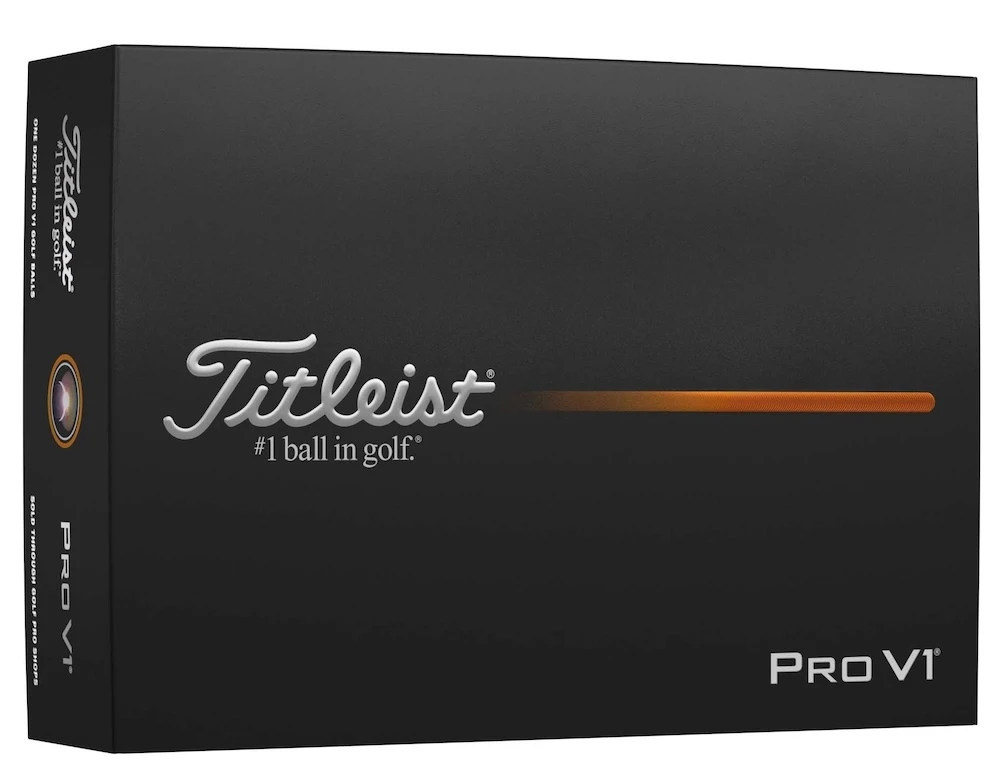
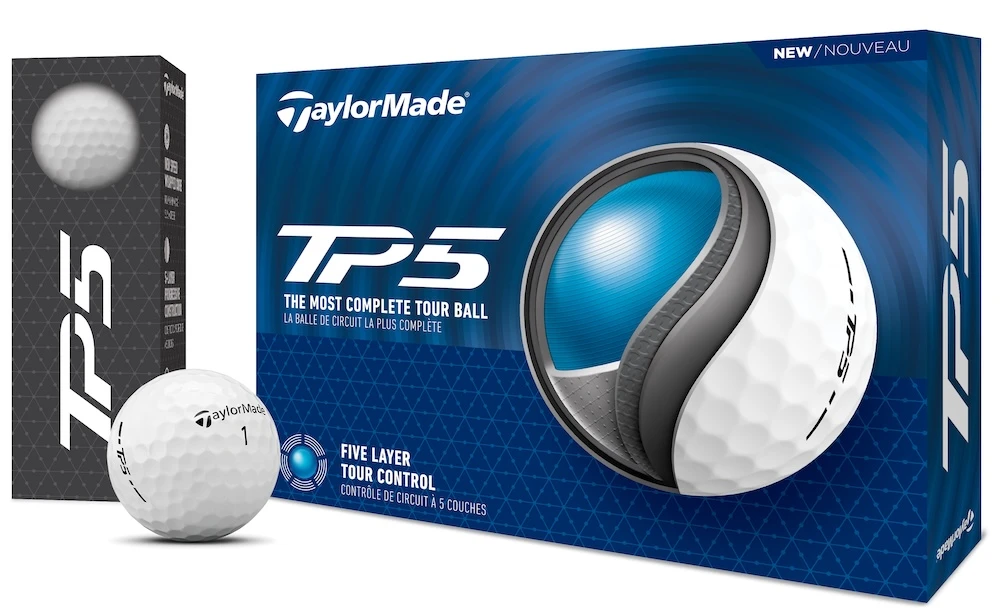
Comparable options exist across the category. Browse balls from Titleist, Callaway, TaylorMade, Srixon, Bridgestone and Wilson, or start from the full golf ball category.
Frequently Asked Questions
Does a lower compression golf ball go farther?
Generally no. Robot testing consistently shows lower compression balls produce slightly less ball speed off the driver at every swing speed. The difference is small enough to ignore below about 85 mph and meaningful above about 105 mph. Nobody gains distance from softness alone.
What compression golf ball should a senior golfer use?
Do not choose a ball by age alone. Swing speed can provide useful context, but ball flight, stopping power, feel, durability and budget matter too. A 70-year-old who swings 100 mph may prefer a tour ball, while a 30-year-old swinging 78 mph may prefer a low-compression model, but neither choice should be made from compression alone.
Can a slow swing speed compress a Pro V1?
Yes. A slower swing deforms a Pro V1 and can play it perfectly well. You do not need “tour speed” to activate a premium ball; the relevant question is whether its launch, spin, feel, durability and price suit your game.
Is golf ball compression measured the same way by every brand?
No. Compression is not covered by the Equipment Rules, so there is no required test or scale. Atti, Riehle and load-deflection methods all yield different values, and some manufacturers publish no number at all. Compare within a single source, not across brands.
Does cold weather change golf ball compression?
It changes how the ball behaves at impact, yes. The USGA conditions balls at 75°F for at least three hours before conformance testing specifically because temperature affects compression and rebound. In genuinely cold rounds, keeping a spare ball in your pocket does more for you than switching models.

The Bottom Line
Compression is a secondary fitting variable, not a swing-speed prescription. It can influence feel and can correlate with ball-speed behavior, but it does not independently predict distance or spin across brands. Choose a ball first for the short-game control, durability, price, and flight you need; then compare actual driver and iron launch/spin results if possible.
Start with the cover and the short-game control you want. Then compare ball flight, especially driver spin, approach-shot height, descent angle and stopping behavior. Use compression only as a secondary tiebreaker between otherwise suitable models. Once you find a ball that fits, play it consistently long enough to learn its distances and reactions.
Keep Reading
- What Driver Loft Should I Use? Driver Loft by Swing Speed
The companion chart. Same swing speed input, bigger yardage payoff. - Stop Guessing: How to Find the Perfect Driver Shaft for Your Swing
Once you know your speed, the shaft is the next lever worth pulling. - Do You Really Need All 14 Clubs? Build a Minimalist Golf Set
Another place where less gear and more consistency wins. - The Sunday Bag Strategy: How to Start Golfing for Cheap
If you are early in the game, spend here before you spend on golf balls.
Writer/Editor: Danny Kapp is a passionate golf enthusiast and a 10-year veteran golf blog writer for Rock Bottom Golf, offering his unique perspective on the game. With a keen eye for detail, he covers various aspects of golf, ranging from technical insights to the latest trends in golf equipment and golf technology.

Sources
- USGA and R&A. Equipment Rules, Part 4, Section 5: Initial Velocity. Primary source for the ball speed limit.
- USGA and R&A. Equipment Rules, Part 4, Section 6: Overall Distance Standard. Primary source for the distance ceiling.
- USGA. The Golf Ball and Distance: Frequently Asked Questions. Source for the 317 yard standard, current test conditions and the 2028 revision.
- R&A Rules Limited and USGA. Test Protocol for Golf Ball Initial Velocity (TPX3007) [PDF]. Source for the 75°F conditioning requirement.
- The R&A. Rules of Equipment, Part 4: Conformance of Balls. Confirms which ball properties are regulated, and that compression is not among them.
- USGA. Research and Test Center Primer. Background on how conformance testing is conducted.
Last Updated on by Danny Kapp